Showing posts with label #soil. Show all posts

Tuesday, November 1, 2016

Let's Vote...to Keep a Good Thing Going!


Building terraces south of our house in 1987
Fifty years ago our family would load up long before daylight to make the drive south to Missouri from Chicago for Thanksgiving dinner. As the sun rose, the frost would gleam bright against the black furrows of plowed ground. Nary a corn stalk disturbed the unbroken furls as far as the eye could see.  Later, as snow fell and piled up windblown against the red snow fencing, the drifts would be crusted with black soil.  The spring thaw would leave another kind of drift: the topsoil that had blown free from the frozen and unprotected ground. It seemed wasteful to let that good soil fill the roadside ditches. Even though I wasn't very old,  somehow I understood that soil was more than the dirt washed off your hands before supper, more than mud on a construction site.

Perhaps that was because the contrast between the flat farm ground of northern Illinois and the rock strewn landscape of central Missouri was so drastic.  Tilling the big garden on the farm in Calloway county yielded a bountiful harvest of rocks.  Clay and gravel were less than a spade length away; digging a post hole was a major endeavor.  This wasn't soil: it was a foundation, a substrate;  what it grew was trees, fossils, multiflora rose.....and fescue.  Nonetheless, my father took his land stewardship very seriously, building ponds and seeding grass waterways on the thin chert ridden pasture ground.

So...imagine being transplanted to a place where ancestral winds piled up great mounds of glacial loam, where a drain spade slipped through the ground like a knife through butter...a place Lewis and Clark called the 'bald-pated prairie' after the tall grasses parting before the wind on either side of the great river.....

....A place where spring rains can run unabated through a tilled field, where a ditch will form anywhere a cow has walked two days in a row......a place so fertile...and so fragile...

No matter your landscape or your land use, the topsoil is a precious resource, one that takes generations to build up and but a few seasons to break down. Worlds reside within that thin upper crust: germination, decomposition, fertilization, aeration. The care and feeding of our soil is no small matter.

Long before the term 'no till' was common currency, soil conservation was a matter of structure, keeping the thin brown line in its place by reducing the velocity, the distance, and the slope of what forces moved against it.  Terraces, tile lines, diversions, and waterways were the tools farmers and contractors employed before chemists, breeders and  engineers gave us the means to leave the topsoil undisturbed while we planted, fertilized, sprayed and harvested. These long lived structures are costly, not quite the same magnitude as buying the kids a new pair of basketball shoes every year.

But our state cherishes its landscape: more than thirty years ago, the people of Missouri voted to pay a 1/10 cent sales tax dedicated to their State Parks and the conservation of Missouri soil and water.  Since then this tax has been renewed three times, a measure of the confidence Missouri citizens have in the application and efficacy of these monies to lands public and private.

Like other farmers, our family has been pushing terraces, building basins, plowing up diversions, and practicing no till farming on our lands for as long as we have been farming.  We are direct recipients of the generosity of Missouri taxpayers and we view the responsibility of maintaining and improving our soil as a calling, not a burden.  To us, every broken terrace and every rutted field entrance is a challenge; after a generation of conservation tillage, we take pride when the combine ride across a terrace face is as smooth as the proverbial baby's cheek.

Here's the pitch and the promise: next week is Election Day 2016.  Whatever your decisions about the rest of your ballot, please take time to vote for the renewal of the  Missouri Soils, Water and State Parks Tax.  Know that your vote will make the beautiful landscape and productive lands of our state better, as it has done since the first vote in 1984.


Terrace building Hurst Farms version, 1987

Plowing and pushing up terraces on our farm 1987


Wednesday, April 13, 2016

Poison, Poems and Prairies


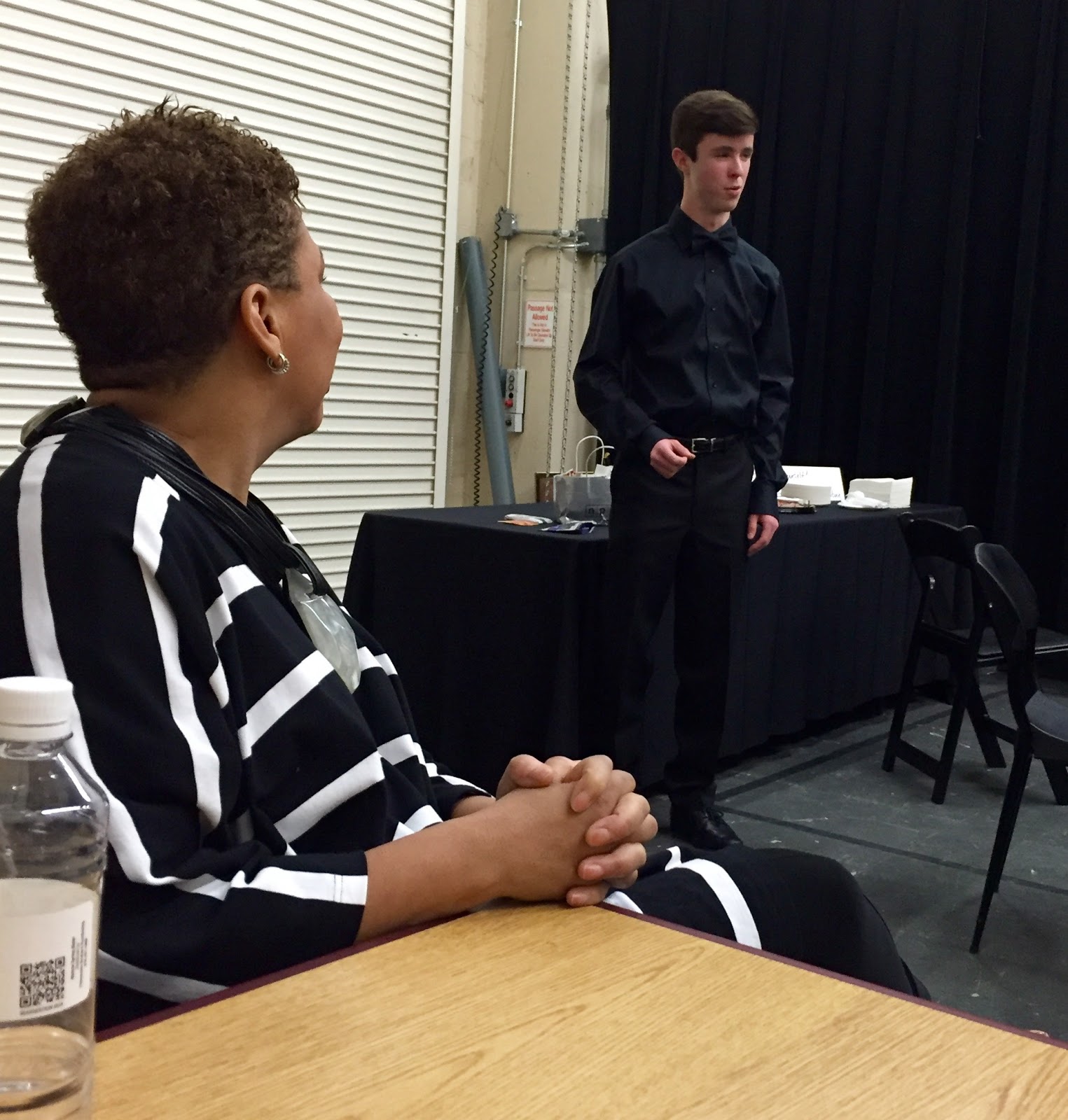
 He's young and slender and dressed all in black.  We're sitting in the 'green room' backstage at the Gem Theater at 18th and Vine in the historic Jazz District of Kansas City.  "This is Alex", the woman with the headset tells us, "And he's going to recite a poem." I don't remember the title of Alex's poem, but it was appropriate to the event being a lusciously descriptive list of the good things cooking in a traditional Southern kitchen.  He exhibits a cultivated intensity, attaching gravity to beans and collards.  We are taking food seriously too, having got to the theater early so Blake can do a sound check; this poem and a couple of chunks of cheese are as close as we are likely to come to supper until this NPR event, Going There, How We Eat, is over and we are invited for a glass of wine and some "curated" food at a reception across the street.


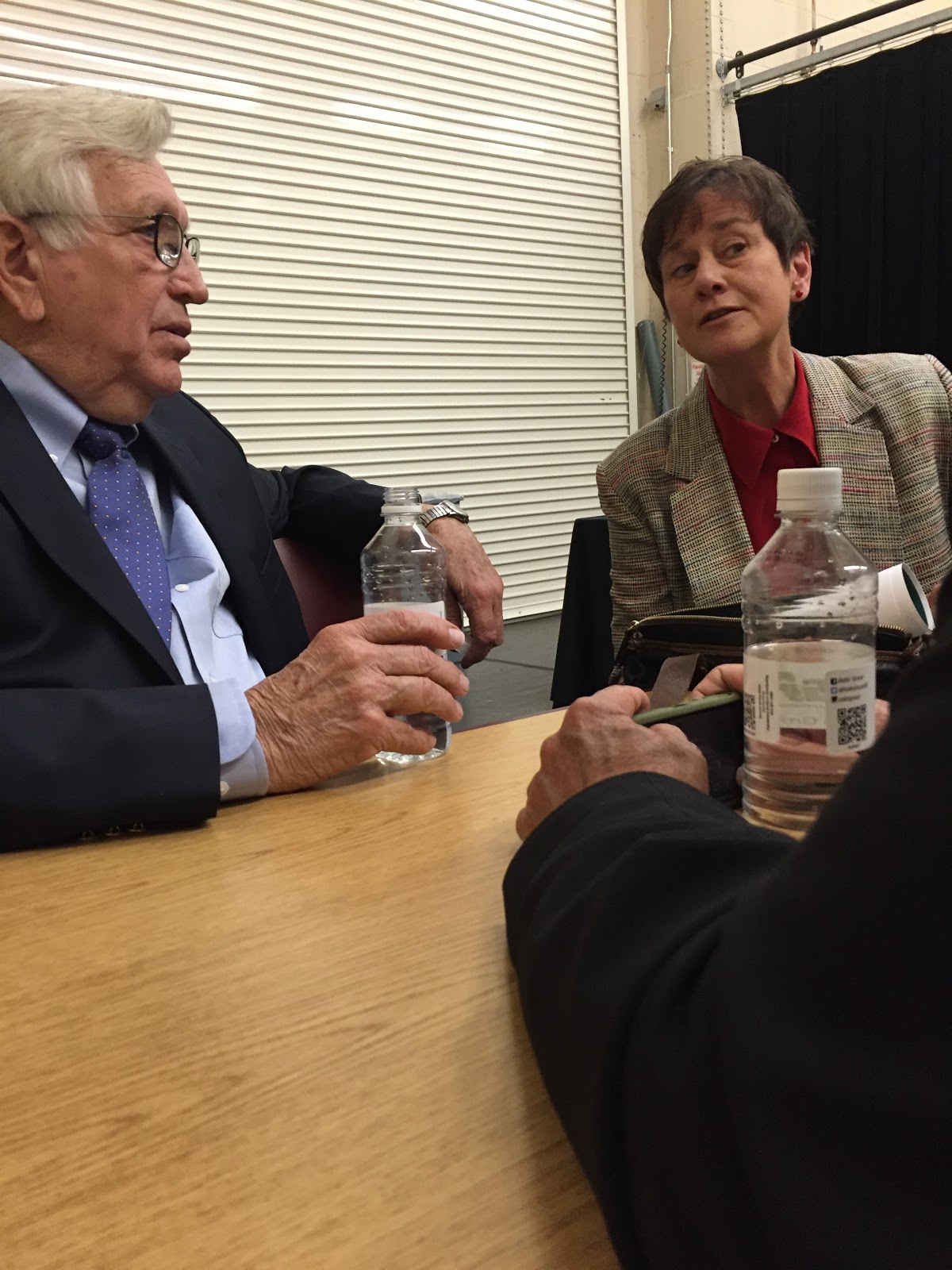
This isn't our first rodeo. The occasion is part of a live-event series for National Public Radio hosted by the weekend host of All Things Considered, Michel Martin. Kansas City is a logical locus for the  focus for this show: “How We Eat” will include both live discussions and a virtual panel of Twitter contributors.  It has been our experience that an invitation to represent the "conventional farmer" viewpoint on a "diverse" agricultural panel is a chance to be the "skunk in the garden party", as Blake represents himself to moderator Michel Martin.  The diverse part is readily apparent in the green room.  Here's the "tomato whisperer", who grows heirloom tomatoes and hosts tomato tastings.  There's a young entrepreneur who went back to her cooking roots after the 2008-9 bust left her jobless. The MacArthur grant genius and grand old man of perennial prairie grasses, Wes Jackson, sits down with us two unrepentant growers of annual crops to talk about the Fall.  No, not Adam and Eve.  The Fall, according to Mr. Jackson, is when one of our hungry ancestors scratched down to bare earth.  From that, 'twas but a wide and slippery slope to the cultivation of  wheat and corn and rice, crops that require the hand of man to plant, to harvest, to thrive, crops that turned humanity not into farmers...but "weeders" in Mr. Jackson's parlance. "I don't know why farmers don't like me,"he says. Yeah.  Perhaps it’s because you consider agriculture a 10,000 year old mistake leading to “soil loss and degradation, ecosystem destruction and high energy use”, while farmers like us tend to believe we marshal limited resources in an economical fashion, utilizing brains and technology to grow maximum food and fiber with minimum “unnatural’ inputs. Blake and I are not unfamiliar with his lifework and enjoy the chance to respectfully spar with someone famous in his field, even though I cannot help but think of the Wizard of Oz as we talk about being  “imprisoned by our technology.”  If there had been a genetic shortcut to a perennial grain, would Mr. Jackson have made that deal with the technological Devil?


 One of the other panelists describes herself as the "farm steward" of the  acreage where she "forages" for sustainably produced fruit, vegetables, herbs and other edibles to sell to her customers.  Nothing value laden in that description, right?  While she insists her intent is not to be confrontational, her description of pesticide use is difficult to construe as anything but antagonistic no matter how mild her manner.  Question: "As I understand it, you're critical of conventional farming. You are all organic...." Answer: "...it's just very practical.  If I just say it out loud that we dump poison on our food or use poison to protect our food...." This is a person familiar with chemicals, with modern medicine. Yet she sees no incongruity between confidence in the science of today's medicine and fear of today's technologies in agriculture.  Growing organic and eating organic is certainly a choice. But it is not necessarily better for the land, the farmer, or the people eating any more than relying on homemade herbal poultices is a better remedy for my headache than a chemical medicine like ibuprofen.


No wonder a self proclaimed conventional farmer using every conceivable tool, genetic, mechanical, cloud based, can feel like he's being picked on.  Blake, the poster child for our version of family farming, takes advantage of every inconsistency in the arguments of the anti technology advocates to defend and promote two fundamental ideas:  1) that the ultimate goal is to feed people and take care of the land, and 2) that there will be a farmer willing to produce whatever the market wishes as long as there is freedom to do so.  This is a conciliatory gesture that most of this audience in Kansas City can rally to: that growing food and buying food and eating food for every budget, taste, and philosophy is far too big a challenge for but one set of rules.


 Michel Martin, the host, steers the group by asking questions that cut through cliche in a way that is pithy and not judgmental.  For instance, a question for Blake: "Why (would) you even feel the need to say you're unapologetic about it (being a conventional farmer)....you know, large-scale farming is in part one of the reasons why this country has been the best-fed nation in the history of the world". For Wes Jackson ringing the doomsday bell about  the outlook for an agriculture based on conventional crops: "How many years do we have left?"  About organic food: "How much would it take to switch to organic?" And I cannot imagine an audience anywhere but in the Midwest approving the notion that folks ought to know what their slaughtered beef looks like.  

 In the end, we skipped the line for the curated food across the road in the Jazz Museum, opting instead for a couple of sandwiches at the Love's Truck Stop just south of St. Joseph.  The wind whipped up a cloud of gravel dust ahead of a squall line visible north on I-29.  There were three cars at the gas pumps and two tables of huddled diners inside. Were the sandwiches we ate in the car at 11 pm as delicious as the tasty greens in Kansas City?

Nope.

I remembered how one of the panelists complained that "food was just fuel...it allows us to keep working.  We don't think of it as history or culture."  But that is exactly the strength and glory of our food system: It is big enough to do both jobs and carry them off well.  Some of us farmers grow cash crops to feed the makings of a chicken sandwich at a truck stop at midnight.  And some of us grow the chef's herbs for a meal savored and celebrated and memorized.

And a very few, like Alex, call it poetry.....


To hear part of the discussion, listen here: