Showing posts with label #organic. Show all posts

Thursday, March 9, 2017

The Customer is Always Right.....?


"I’ve had the first one of the year…..more to come.  A customer wants to know which ….uhhh…let me copy and paste this because I can’t do it justice.

Please advise."

I take a deep breath. Our family grows a lot of plants for the woman sending us this email.  We ship vegetable starter plants, finished hanging baskets and flowering pots, and...starting this year....herbs and cucumber plants, stevia and edamame (yep, edible soybeans) and a host of other flowering annuals.  In our greenhouses, we grow not just hybrid tomatoes and cherry tomatoes, but also heirloom tomatoes, hot and sweet peppers, destined for the patios and gardens of Nebraska, Iowa, Missouri, with some making their way as far north as the Dakotas.  Last year we fielded questions about our entire production system for growing the vegetables that would eventually bloom and produce something edible: were they organic; did they contain GMOs? (insinuating that being GMO is a contagion one can catch.)   But the letter she was preparing to copy and paste..copied and pasted here ....was clearly one for the record books.  Read it and weep.

"I need to know which plants that you sell are genetically modified - what I mean by genetically modified are plants that undergo unnatural genetic engineering including shooting genes into chromosomes.  I am fine with plants that have been selectively bred.  Selective breeding is a natural process of natural selection.  I would prefer native but will accepts selective breeding options.  If any of these flowering plants are native and not altered in any way, I need to know that for sure.  I would like to place a sizable order but your plants are not marketed to indicate which ones may be unnaturally genetically modified.  I do not want to kill bees and other pollinators by planting unsafe plants for them.  I am also selective about considering plants that produce vegetables for our consumption.  I only plant non genetically modified (no lab created seeds) food plants for my family's consumption and only use organic soil.  I do not use miracle grow or other harmful products in my food gardens.  If your food plants are not modified, you need to indicate it for sure.  I need to know, for sure, that the flowering ornamental plants I consider from your company will not be harmful in any way to our ecosystem."

Sigh.  Really, where does one start.  With the confused, incomprehensible, and value laden  differentiation between 'natural' and whatever it's antithesis is considered to be?  (Unsafe? Harmful? Unselective, perhaps?  Foreign, heaven forfend.....)  How can we possibly cut a Gordian knot that defines "selective"breeding as a "natural" process of "natural" selection!!?  Selection involves a choice...by someone or something.  In this case, the someone is a human being.  In the broadest sense, yes, a human being is certainly something "natural", but using that interpretation makes all genetic alteration natural and I don't think that's what the writer intended to imply at all.  Choosing a desirable characteristic is certainly "selection", but there is nothing "natural", aka accidental or arbitrary, about it.


Let's continue. No, I'm afraid none of the flowering plants we are growing for this account are 'native'.  They are annuals and unmistakably altered (bred) for color, hardiness, disease resistance, long blooming, and probably, drought tolerance, seeing as many of the flowers purchased by our customers have to endure conditions that are quite "unnatural".... roots constrained to a very small volume of soil and watered once a week or less....  But no problem: if one desires a "natural" planting there are other options.  Just let these highly improved annuals reseed for year or two and the offspring will revert to the pallid ancestors of sporadic bloom and sprawling habit. Or grow your own natives from seed or purchased perennials.  There ARE indeed grand and garden worthy native plants; I'm a huge fan.  But growing indigenous species will not make you a better person or provide more habitat for pollinators or butterflies than a pot of lantana or a planting of pentas.  Grow 'em both; that's my advice!

And let's get one thing perfectly straight; there isn't going to be a genetically modified seed or plant in any of our greenhouses this year.  I wish there were!  I wish there was a way to prevent fungus from spotting zinnias, botrytis from browning geraniums, and put a stop to the downy mildew plague that has devastated impatiens the last few years!  If one buys a tomato from us, it may be a brand new hybrid with lots of letters after its name signifying its resistance to various nasty fungi...or one can choose something tried and true like Rutgers or Big Boy....but we will be just as happy to sell you a heritage tomato variety like Cherokee or German Johnson.  Choice is good, and one need only leaf through a catalog like Totally Tomatoes to realize the past, present, and future of home garden production offers a cornucopia of decisions.  

While I'm on my garden soapbox, allow me to point out that it would be a really tough job to find a totally inorganic soil.  Even an abused garden plot will contain a fair amount of organic matter in the form of stems, leaves, roots, mulch and other leftovers in various stages of decomposition.  I guess my grandkids' sandbox might be considered an inorganic garden spot...but not after they've pounded a half dozen gourds into pulp and planted the seeds.....

Ecosystem is such a sterile technical term.  A garden can be many things...organized or unkempt, monotone or multi-hued, edible or ornamental, frivolous or practical. Forgive me if I believe planting flowers and vegetables, whether for consumption or pleasure, is a net gain for the earth and all the creatures thereof.  We grow plants for a living...and for love.  That's the kind of rule I can live with....


Wednesday, April 13, 2016

Poison, Poems and Prairies


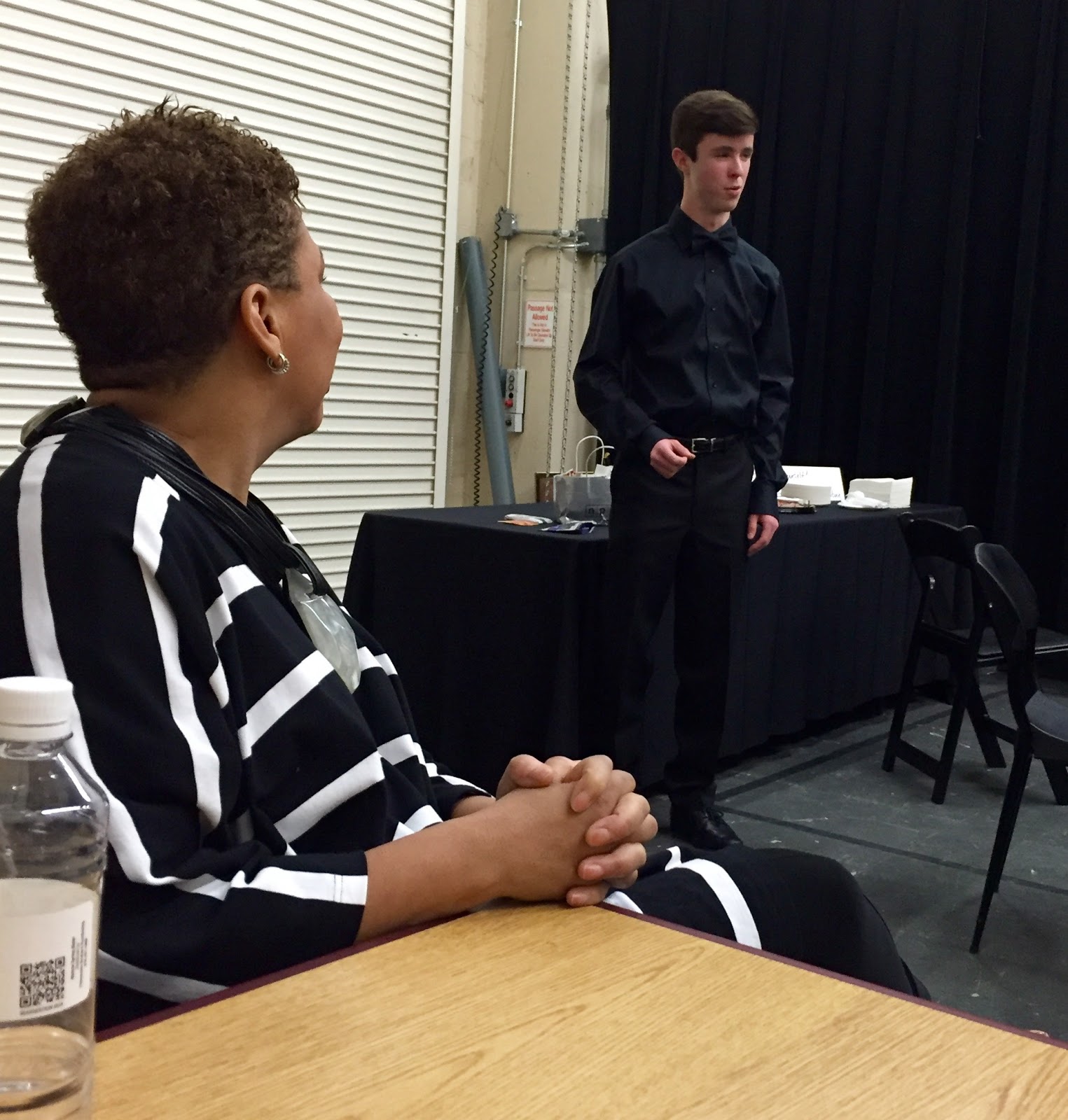
 He's young and slender and dressed all in black.  We're sitting in the 'green room' backstage at the Gem Theater at 18th and Vine in the historic Jazz District of Kansas City.  "This is Alex", the woman with the headset tells us, "And he's going to recite a poem." I don't remember the title of Alex's poem, but it was appropriate to the event being a lusciously descriptive list of the good things cooking in a traditional Southern kitchen.  He exhibits a cultivated intensity, attaching gravity to beans and collards.  We are taking food seriously too, having got to the theater early so Blake can do a sound check; this poem and a couple of chunks of cheese are as close as we are likely to come to supper until this NPR event, Going There, How We Eat, is over and we are invited for a glass of wine and some "curated" food at a reception across the street.


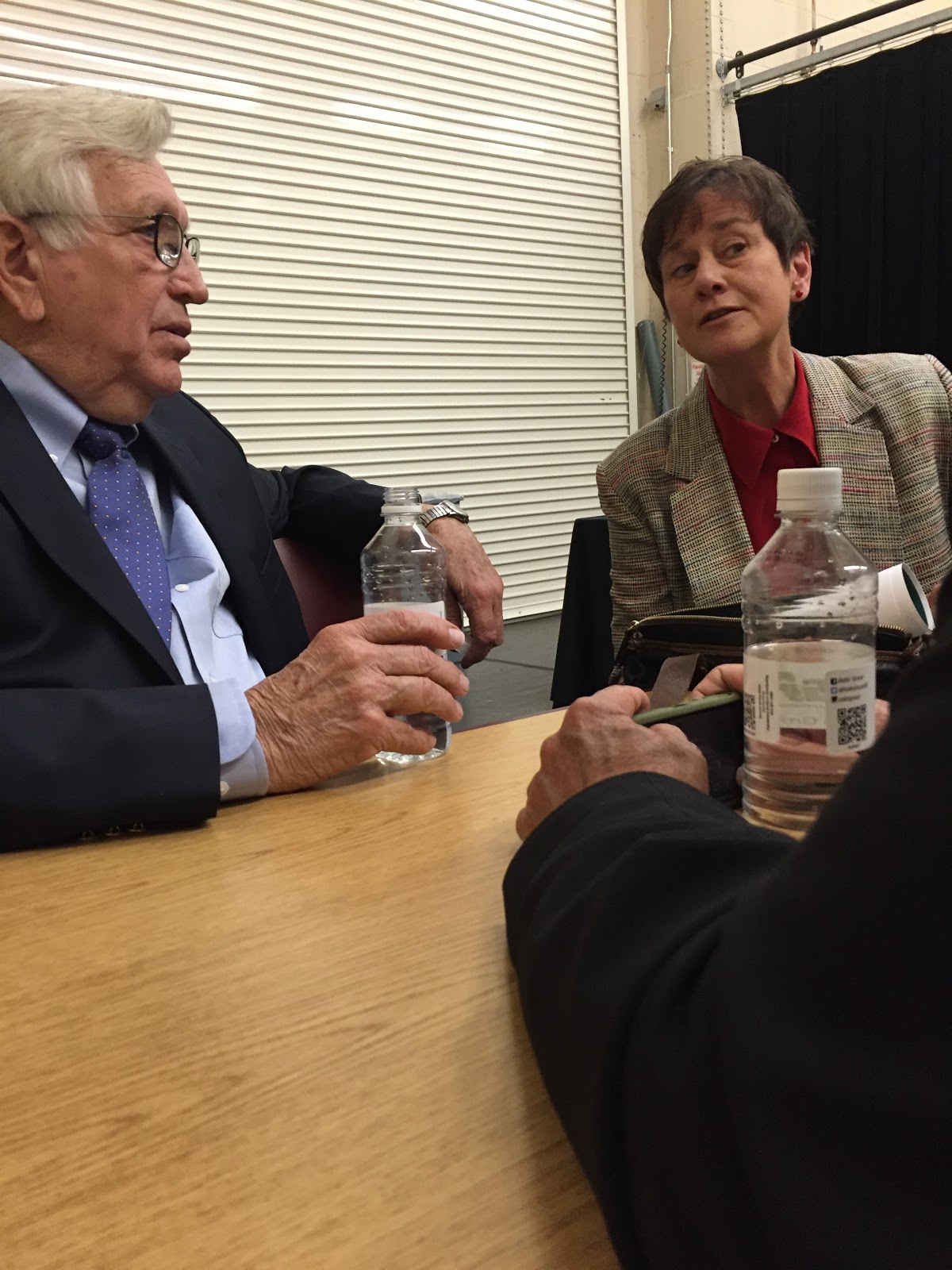
This isn't our first rodeo. The occasion is part of a live-event series for National Public Radio hosted by the weekend host of All Things Considered, Michel Martin. Kansas City is a logical locus for the  focus for this show: “How We Eat” will include both live discussions and a virtual panel of Twitter contributors.  It has been our experience that an invitation to represent the "conventional farmer" viewpoint on a "diverse" agricultural panel is a chance to be the "skunk in the garden party", as Blake represents himself to moderator Michel Martin.  The diverse part is readily apparent in the green room.  Here's the "tomato whisperer", who grows heirloom tomatoes and hosts tomato tastings.  There's a young entrepreneur who went back to her cooking roots after the 2008-9 bust left her jobless. The MacArthur grant genius and grand old man of perennial prairie grasses, Wes Jackson, sits down with us two unrepentant growers of annual crops to talk about the Fall.  No, not Adam and Eve.  The Fall, according to Mr. Jackson, is when one of our hungry ancestors scratched down to bare earth.  From that, 'twas but a wide and slippery slope to the cultivation of  wheat and corn and rice, crops that require the hand of man to plant, to harvest, to thrive, crops that turned humanity not into farmers...but "weeders" in Mr. Jackson's parlance. "I don't know why farmers don't like me,"he says. Yeah.  Perhaps it’s because you consider agriculture a 10,000 year old mistake leading to “soil loss and degradation, ecosystem destruction and high energy use”, while farmers like us tend to believe we marshal limited resources in an economical fashion, utilizing brains and technology to grow maximum food and fiber with minimum “unnatural’ inputs. Blake and I are not unfamiliar with his lifework and enjoy the chance to respectfully spar with someone famous in his field, even though I cannot help but think of the Wizard of Oz as we talk about being  “imprisoned by our technology.”  If there had been a genetic shortcut to a perennial grain, would Mr. Jackson have made that deal with the technological Devil?


 One of the other panelists describes herself as the "farm steward" of the  acreage where she "forages" for sustainably produced fruit, vegetables, herbs and other edibles to sell to her customers.  Nothing value laden in that description, right?  While she insists her intent is not to be confrontational, her description of pesticide use is difficult to construe as anything but antagonistic no matter how mild her manner.  Question: "As I understand it, you're critical of conventional farming. You are all organic...." Answer: "...it's just very practical.  If I just say it out loud that we dump poison on our food or use poison to protect our food...." This is a person familiar with chemicals, with modern medicine. Yet she sees no incongruity between confidence in the science of today's medicine and fear of today's technologies in agriculture.  Growing organic and eating organic is certainly a choice. But it is not necessarily better for the land, the farmer, or the people eating any more than relying on homemade herbal poultices is a better remedy for my headache than a chemical medicine like ibuprofen.


No wonder a self proclaimed conventional farmer using every conceivable tool, genetic, mechanical, cloud based, can feel like he's being picked on.  Blake, the poster child for our version of family farming, takes advantage of every inconsistency in the arguments of the anti technology advocates to defend and promote two fundamental ideas:  1) that the ultimate goal is to feed people and take care of the land, and 2) that there will be a farmer willing to produce whatever the market wishes as long as there is freedom to do so.  This is a conciliatory gesture that most of this audience in Kansas City can rally to: that growing food and buying food and eating food for every budget, taste, and philosophy is far too big a challenge for but one set of rules.


 Michel Martin, the host, steers the group by asking questions that cut through cliche in a way that is pithy and not judgmental.  For instance, a question for Blake: "Why (would) you even feel the need to say you're unapologetic about it (being a conventional farmer)....you know, large-scale farming is in part one of the reasons why this country has been the best-fed nation in the history of the world". For Wes Jackson ringing the doomsday bell about  the outlook for an agriculture based on conventional crops: "How many years do we have left?"  About organic food: "How much would it take to switch to organic?" And I cannot imagine an audience anywhere but in the Midwest approving the notion that folks ought to know what their slaughtered beef looks like.  

 In the end, we skipped the line for the curated food across the road in the Jazz Museum, opting instead for a couple of sandwiches at the Love's Truck Stop just south of St. Joseph.  The wind whipped up a cloud of gravel dust ahead of a squall line visible north on I-29.  There were three cars at the gas pumps and two tables of huddled diners inside. Were the sandwiches we ate in the car at 11 pm as delicious as the tasty greens in Kansas City?

Nope.

I remembered how one of the panelists complained that "food was just fuel...it allows us to keep working.  We don't think of it as history or culture."  But that is exactly the strength and glory of our food system: It is big enough to do both jobs and carry them off well.  Some of us farmers grow cash crops to feed the makings of a chicken sandwich at a truck stop at midnight.  And some of us grow the chef's herbs for a meal savored and celebrated and memorized.

And a very few, like Alex, call it poetry.....


To hear part of the discussion, listen here: