Showing posts with label #family farming. Show all posts

Monday, October 30, 2017

Important Enough: Field Notes

“Choose the least important day in your life. It will be important enough.”

- Thornton Wilder, Our Town

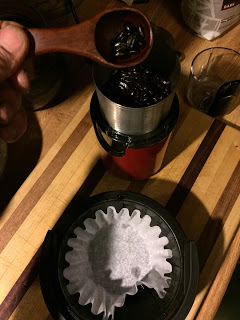
Whether the day is frigid or warm, dark or sunny, the first thing I do after I come down the stairs into the kitchen is make coffee.  Perhaps it’s the whole nine yards in the Bunn...or may be just a quick cup from the Keurig. I pour tumblers of milk, then either fill cereal bowls or cut a coffeecake for the two of us. It’s our breakfast; it’s what we do everyday.
But...as Thornton Wilder reminds us, what seems commonplace and routine to you may be fantastical in someone else’s eyes.
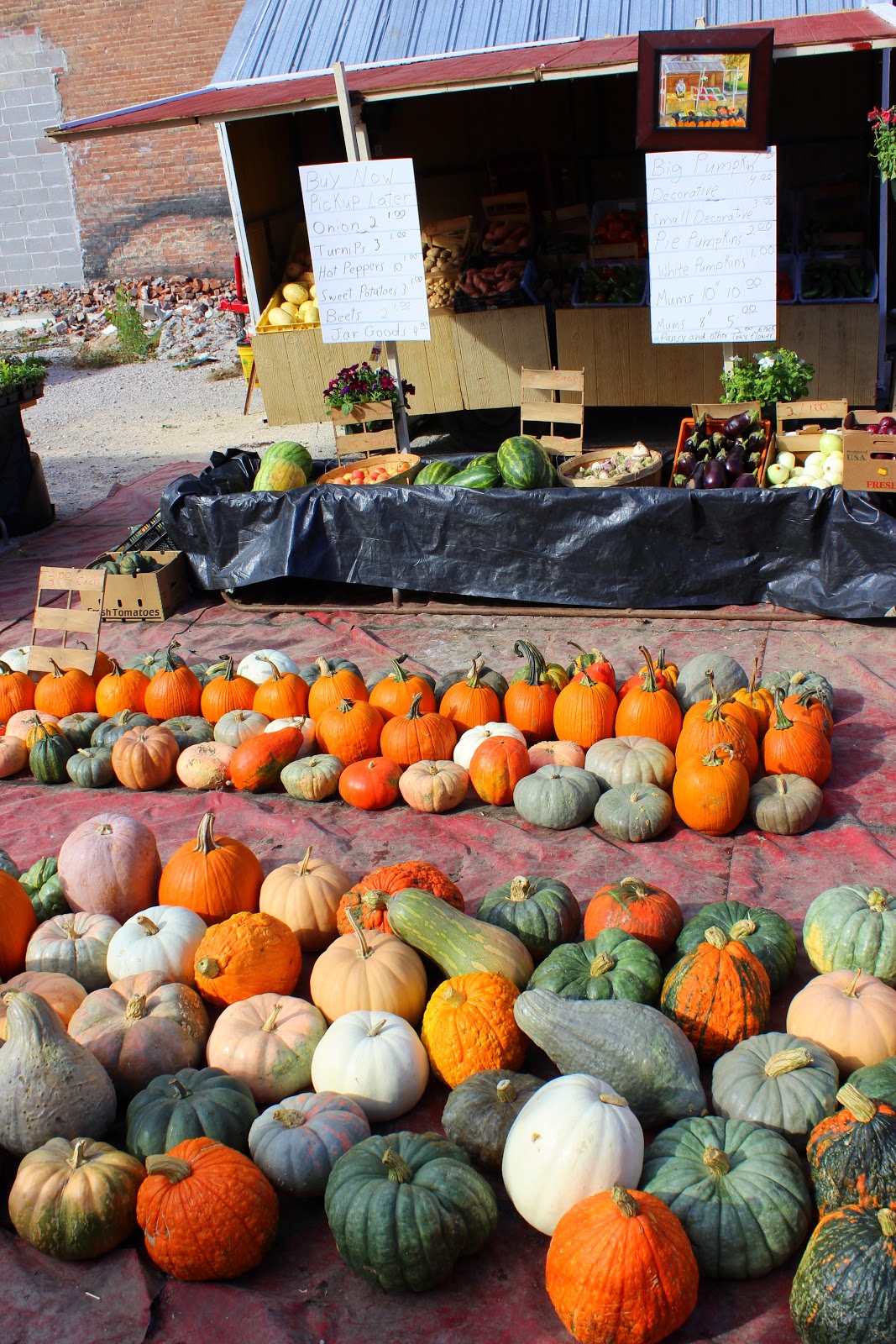
Some deep atavistic urge must well up after the autumnal equinox, else why would people flock to pumpkin patches and sunflower fields?  I understand the attraction of apple orchards and wineries, but piling up pounds upon pounds of picturesque but largely inedible squash as a proxy for blessings of a bountiful harvest?  Acorns...or potatoes….or, heaven forfend, turnips..are  a more rational option.
October is the season for news reporters and television producers to leave their urban enclaves and seek out those ‘raise the song of harvest home’  while they ‘safely gather in, ere the winter storms begin…’ Only harvest itself is as predictably perennial as the human interest story featuring stalwart farmers, dusty red sunsets, and the fascinating machines that transform standing stalks into hoppers, then truckloads, then bins full, of the golden grains that feed the world.


Hugh Sidey not only wrote about Presidents as a professional, but he was known and respected by the men and women of the White House as a friend.  Mr. Sidey had deep roots in Iowa; his brother ran the newspaper in Greenfield, and one trip west in 1994, he drove down to Atchison county to talk about agricultural trade with the Hurst family.  Blake and I considered him a celebrity...he was not just an icon in Time magazine, but also a pundit on several of the political shows we loved to watch on Sundays. We discovered he was also a sincerely kind and generous man, genuinely fascinated with agriculture and respectful of Midwesterners in general. (He treated our whole family to a steak dinner in Washington, D.C. producing the biggest tab I had ever seen, and bestowed books of history on each of the three kids….)
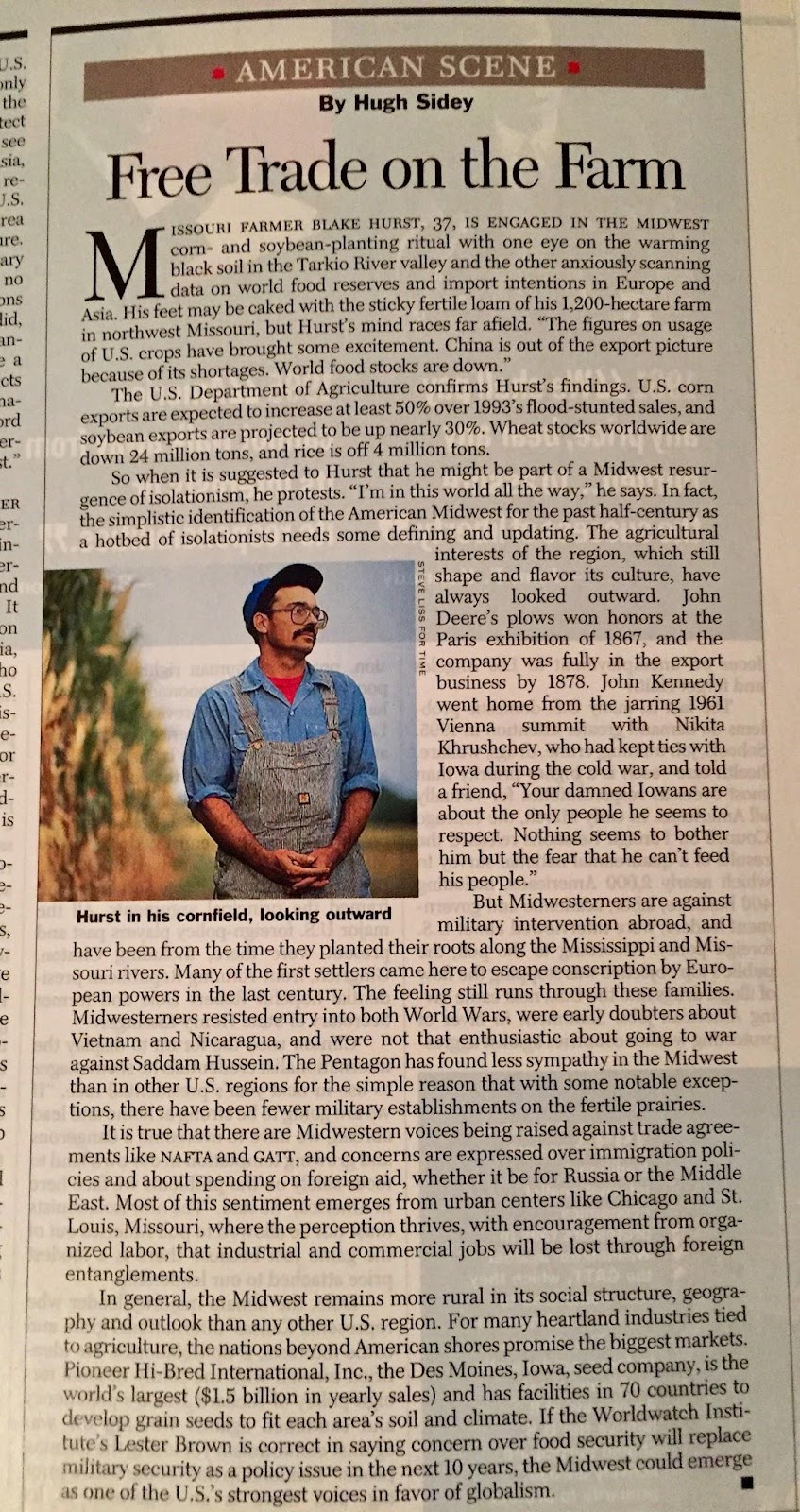
IMG_1627.JPG


Back in the ‘90s, CNN came to visit us, hot on the trail of an encouraging heart-warming harvest story featuring a ‘real’ family farm.  From the sausage and eggs popping grease to the school bus pulling up into the driveway and the work clothes flapping on the early morning breeze, no homely detail was too small to be recorded.  They interviewed Blake in the midst of one of the prettiest corn fields on the farm, and made their story more theatrical and less honest when the whole family feasted under the big pine trees of Millie and Charlie’s front yard for the noon day meal.  
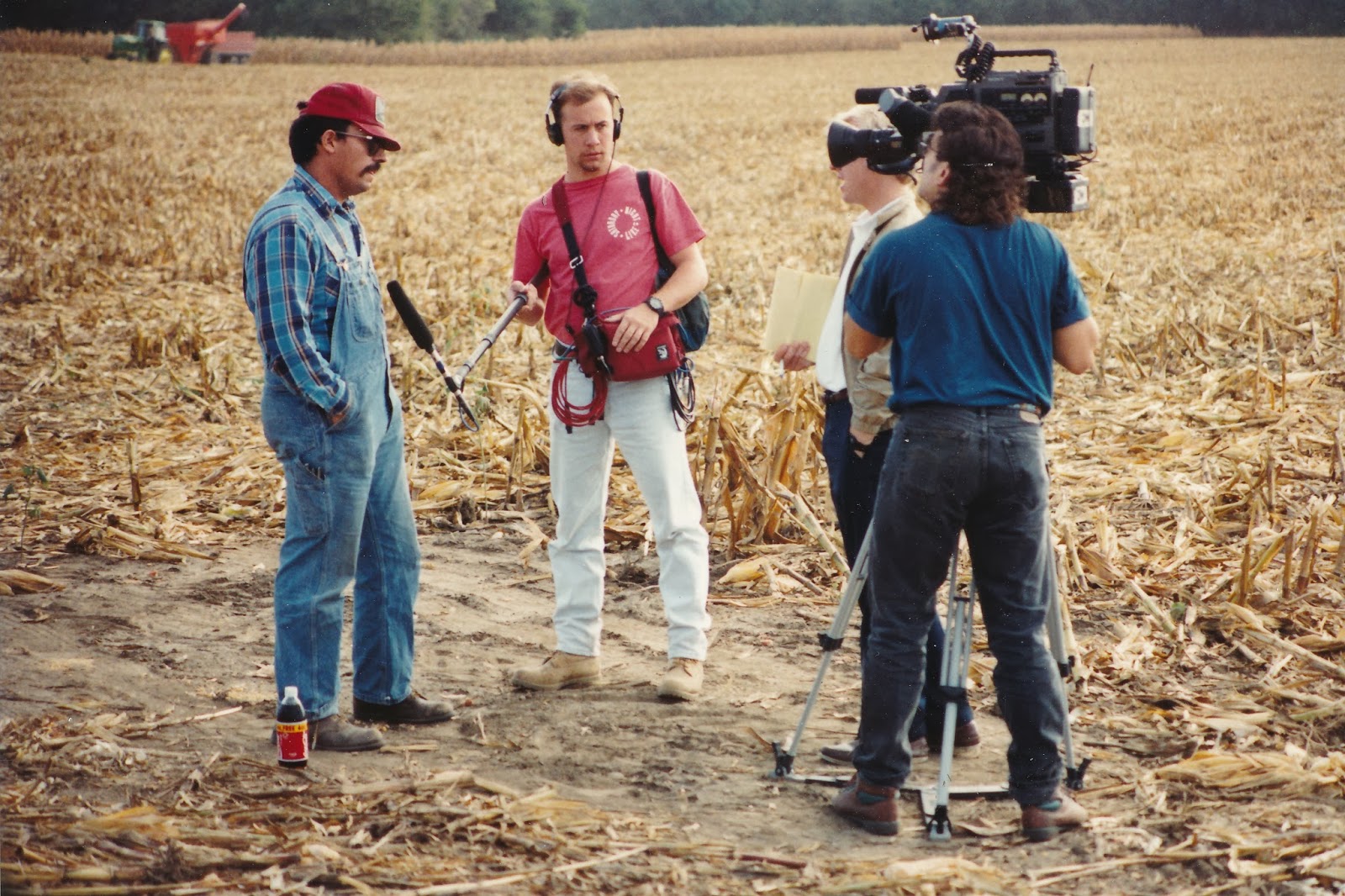

Years later, another early morning in a different kitchen, the cameras are rolling while Blake talks about technology in farming and I peel apples for a big slab pie for the midday meal.  Once again, the smallest of food details fills the lens and I’m as conscious of the string of Golden Russet peels as Blake is about the nuance of his explanations.  
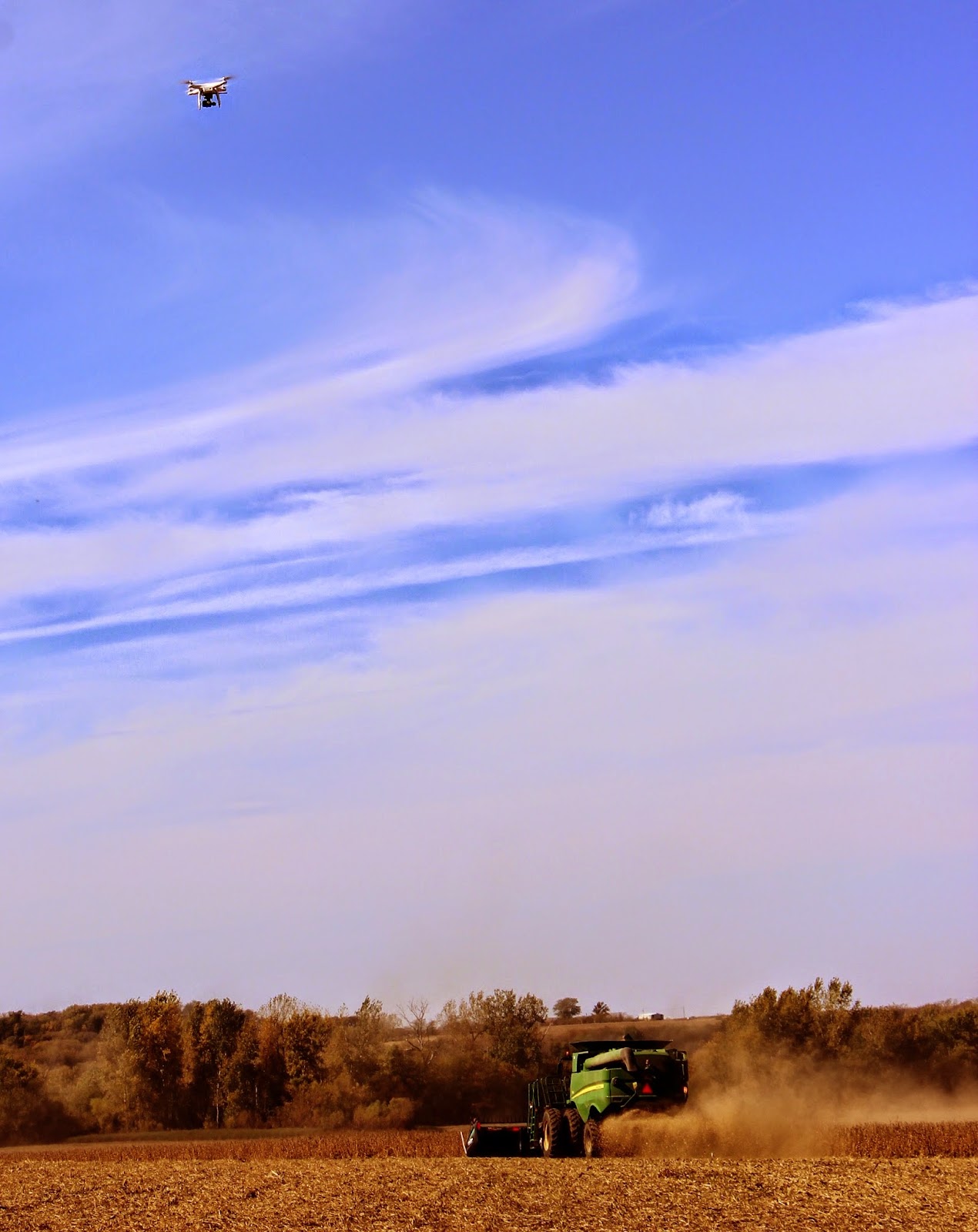
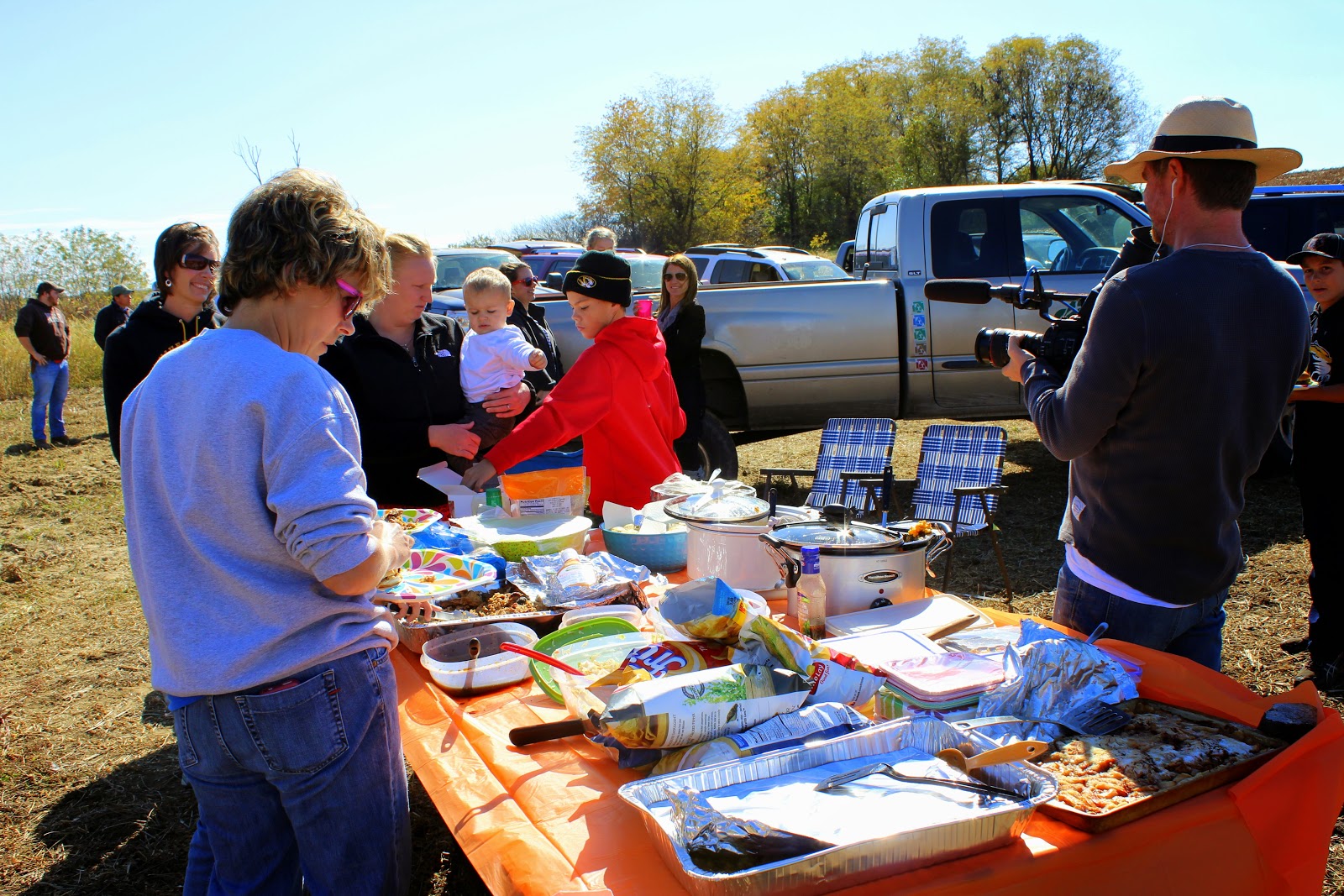
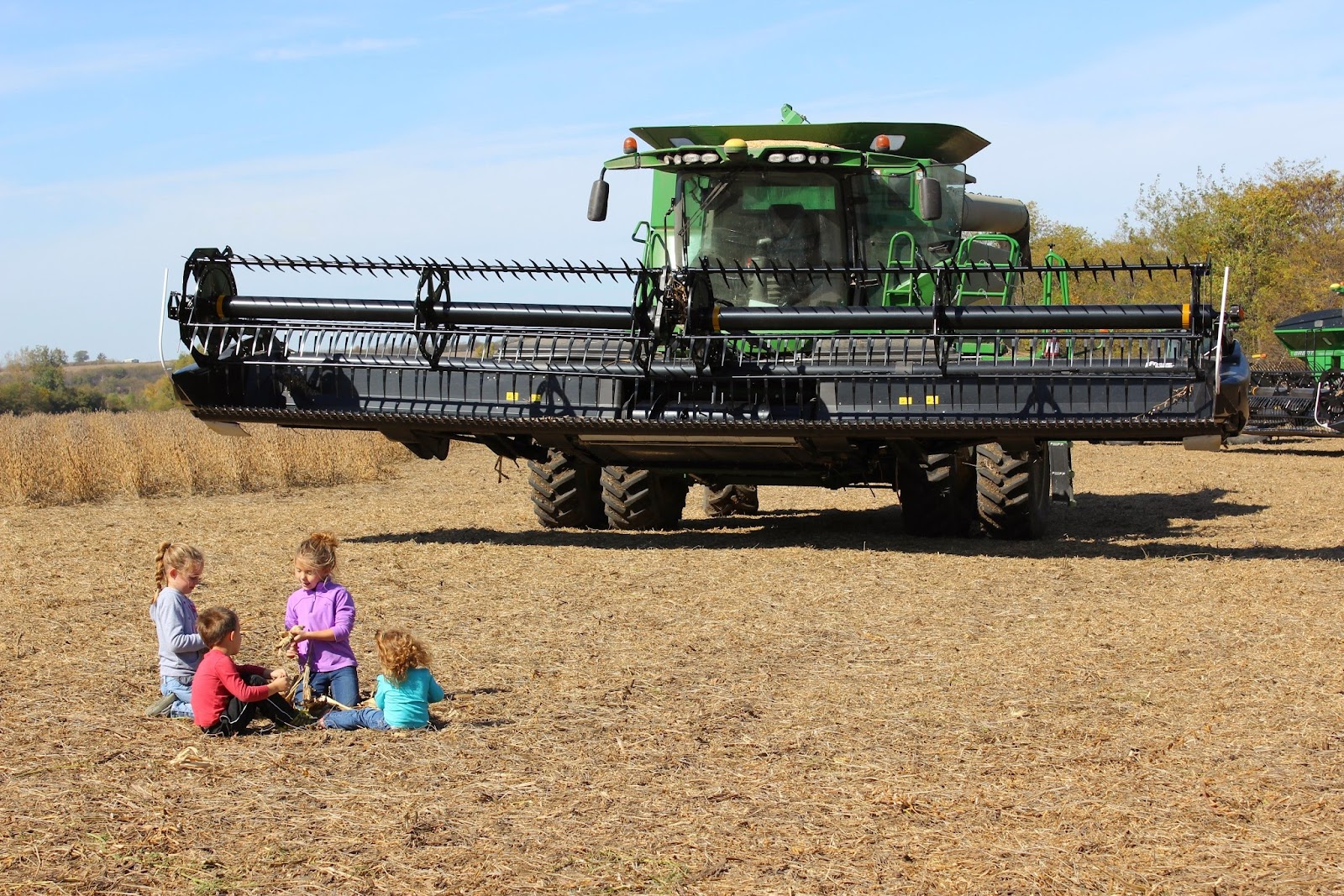
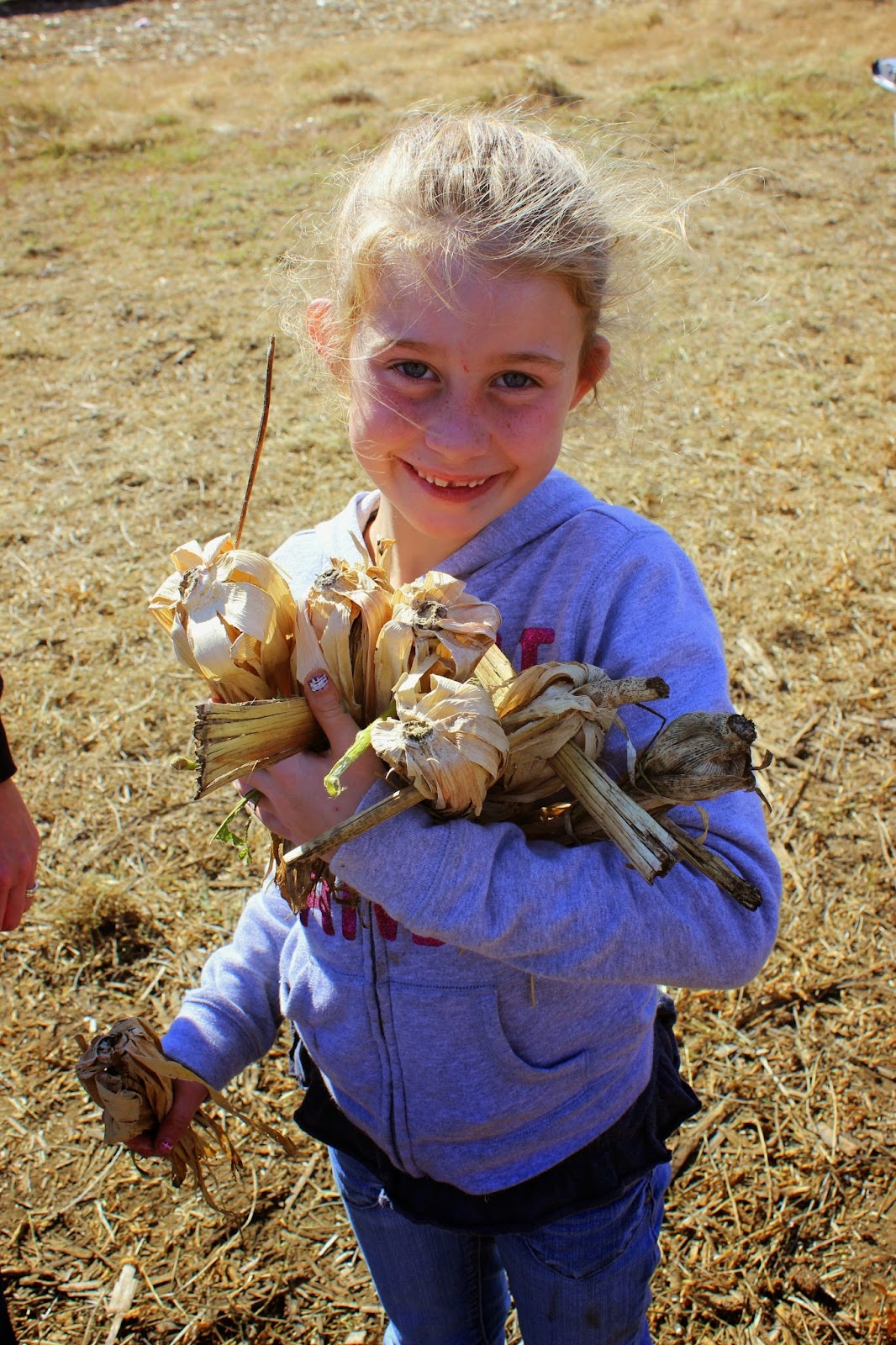
Times have changed, but Charlie still drives the filmmakers across the wide bottom field while a drone hovers overhead and some of his great granddaughters sit in the stalks making corn husk dolls.  And we eat...it’s what we do!  Crock pots and corn chips, sandwiches and salads.  Pie.  Simple fare, the kind of food we sling into Tupperware and Rubbermaid every day of harvest.  But someone is watching; we are not alone. This Sunday’s meal is recorded, if not for posterity, then at least for our memory, which makes it important enough.
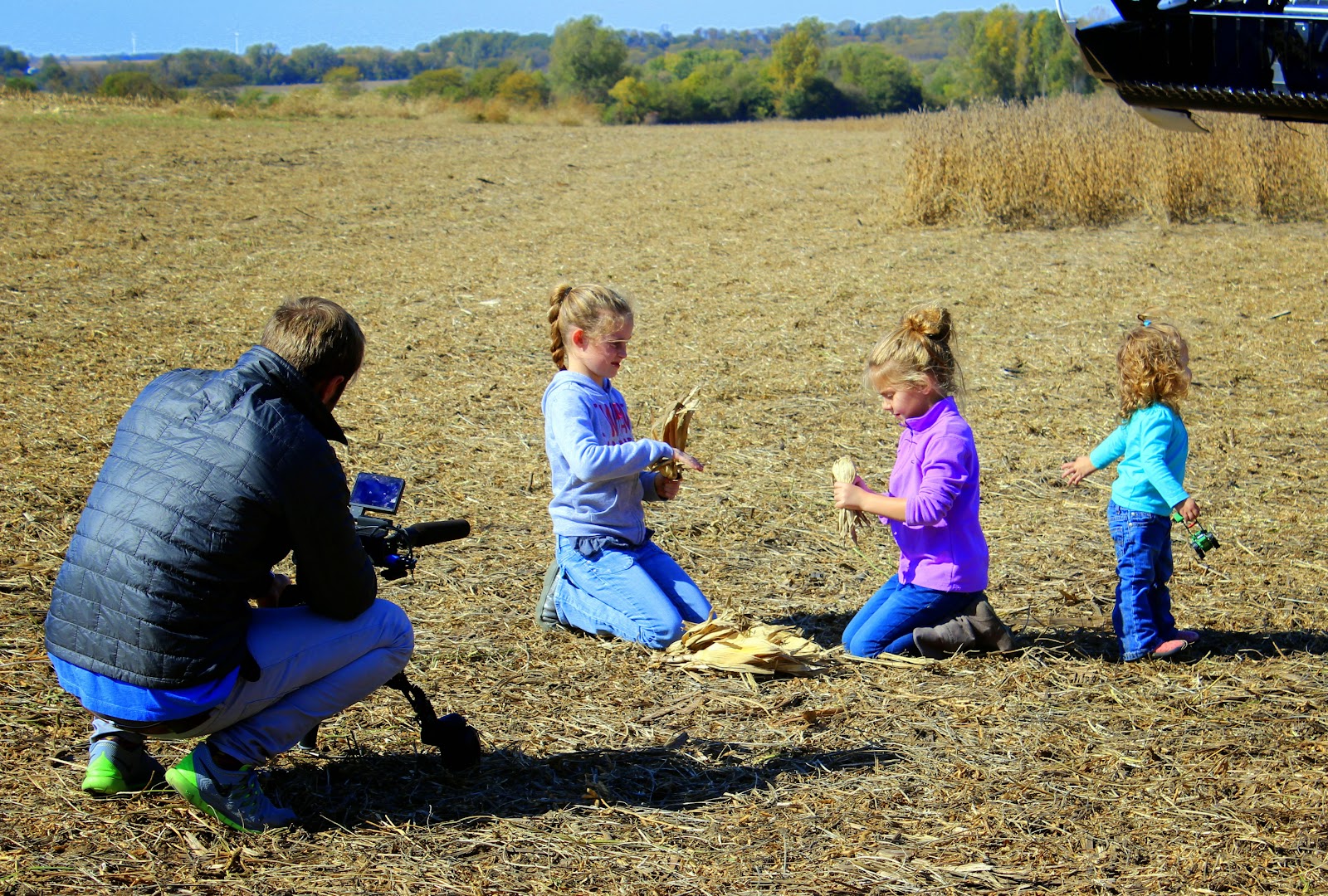
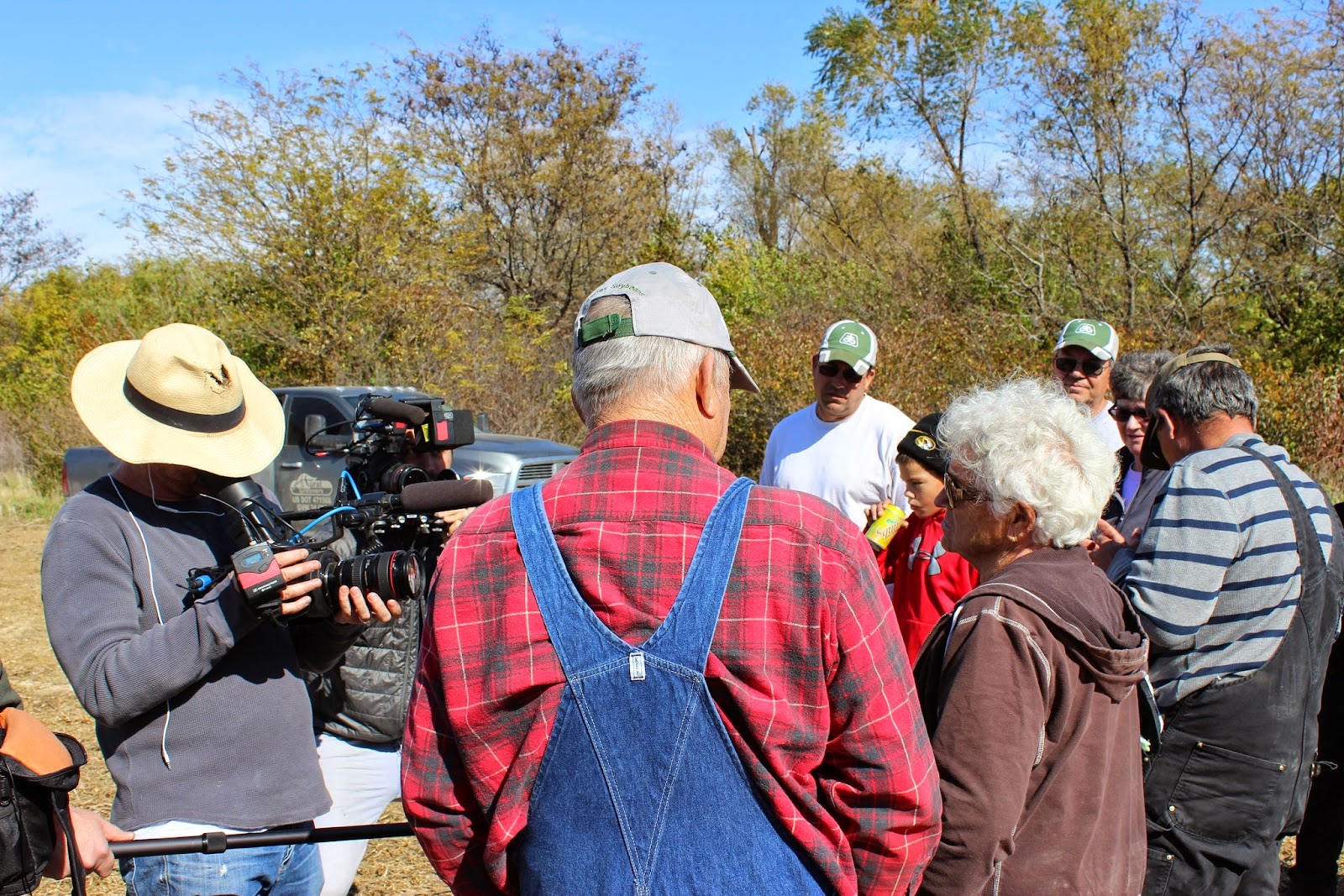


They were a rare and wonderful experiences when Hugh Sidey and the guys at CNN came to the farm; farmers typically didn’t attract the attention of major magazines and news organizations without a farm crisis or the natural disasters that are the staple of slow news days.  We were proud to host these visitors from another world to our family farm: proud of our family  as much as the farm itself.  There was no particular angle or ‘gotcha’ moment...no issue or practice we needed to defend or pussyfoot around.  Our big machinery, our terraces and no till practices, our productivity, and our hard work from generation to generation told our story.
The folks from Farm Evolution sought answers to complex and controversial questions, not a feel good story about families working together on the land.  Eating together was picturesque; the weather was beautiful; the grandkids playing in the dirt were endearing...and good video!..., but tell us about why we should trust you with this science called genetic engineering?


No doubt in my mind these fertile Missouri fields will host other curious visitors some future sunny breezy October day.  What will they expect as they film the harvest? Will they find our family farm quaint?  Confusing? Cold and technological? Will we be able to convey the bond between family and land?  The deep knowledge built of decades of experience and passed by stories as much as field maps?  Will they understand that our least important days...our routine days of coffee, dust, and paper plates …. week after week, year by year….are important enough.

Friday, September 2, 2016

Cherry-o

Entropy. Anyone remember entropy from high school? I was introduced to the term in freshman physical science: it was an enlightening experience and, along with original sin, explained much about the workings of the world. Entropy: the gradual but unpredictable decline of order into chaos.

Entropy explains August in Missouri. Our gardens have slumped; the maturing fields of grains are marred by leaf disease; weeds poke up through the canopy. Lawns are a mass of rampant water grass. Disorder. Chaos. That will be the state of our landscape until harvest ends the madness and the world settles into winter.
In the fruit country of northern Michigan, August is harvest. Driving through this lovely countryside, you pass row after row of trees laden with apples, blushing gold and pink, and fruit stands with baskets of peaches and pints of sweet black cherries. Ahh..we Missourians cannot resist a sweet cherry; we wait eagerly each summer for them to appear in our stores. On a whim, we pull over to a serve yourself (help wanted!) fruit stand and buy a pint, enjoying the sweet treat and pitching the pits out the window as we drive….
Cherry immersion! Salmon with cherry barbecue sauce for supper and later on, an afternoon of golf on a course built through a cherry orchard. Tourists we may be, but we are also farmers, and curious about cherries as a crop, not just as the raw material for one of Lee’s summer pies.

This is just the tip of the cherry iceberg. I can’t resist taking home jars of cherry salsa and the barbeque sauce, unmistakably cherry chunky and cherry red, but you might eat a Michigan cherry as dessert in your holiday fruitcake, your black cherry ice cream, or in a myriad of other treats topped or decorated with a Maraschino cherry!

Many of the best beloved cherry concoctions are as man made as the machines that harvest them. The rarity and expense of true ‘Maraschino’ cherries encouraged cherry processors to democratize the treat by brining the fruit until it was a pale version of its former self, then infusing it with syrup and color until every cherry was the beloved hue children envision atop a hot fudge sundae. Candied cherries are super sweet, too, one of the reasons a fruitcake passes from generation to generation.
Cherry harvesting is an intricate mechanical ballet. Machines drive alongside the cherry trees through the rows, stopping at each tree. One enfolds the trunk; both are fitted with baffles that direct the bouncing fruit toward the conveyor in the middle. When the machines are in place, a vigorous shaking ensues, but for mere seconds, then the machines separate, and move on to the next tree. The fruit runs up the conveyor into bins of water; each bin can hold 1000# of cherries. The water allows sticks and leaves to float to the top and be picked out before the cherries leave the orchard. Another type of picker drives up to a tree, unfolds like an umbrella or dragon wings around the trunk, then shakes the tree and gathers the cherries onto a conveyor. These harvesters can picks 4 trees a minute. It takes me a half hour on a ladder and dozens of cherries on the ground to fill an ice cream bucket! Whether combining corn or harvesting fruit, the imaginations of the engineers have devised some amazing labor saving machinery:

In today’s supercharged food climate, it is deemed insufficient to be beautiful and tasty; a food must cure what ails ye as well. Dried cherries and cherry concentrate (especially from tart cherries) are touted for its antioxidants and melatonin, as well as helping to ward off Alzheimer’s. I’m all for sleeping better, and Lord knows, forgetfulness is a plague, but something as versatile and miraculous as a cherry, or any fruit that appears like a Christmas in July present, shouldn't have to wave its flag like a medicine man.

Cherry trees begin bearing between three (for tart, or what we call, pie cherries) and seven years (for sweet varieties). We saw orchards in all stage of life, from three foot saplings with drip lines to ensure success to trees nearing the end of their 25-30 years of useful life. At any age, they make a graceful landscape, a testament to husbandry at the highest level.

‘The sweet things in life, to you were just loaned
So how can you lose what you’ve never owned?
Life is just a bowl of cherries
So live and laugh at it all.’
Ray Henderson and Lew Brown

In other words, just enjoy Blake's personal favorite, the cherry fudge…


Wednesday, September 9, 2015

Apple Lion

What a crummy year for tomatoes! This summer of 2015 has granted cool nights and drenching days: fabulous for flowers of begonias, not so conducive for blooms on tomatoes.  I bring in the harvest one handful at a time...enough to decorate either three BLTs or two iceberg wedge salads. I am disheartened when my photos from Septembers past feature buckets of juicy fruits, gold and striped, pink and scarlet.  There they are: in the garden, arrayed on the picnic table to ripen, on the countertop cored and cleaned ready to be cooked, and steaming out of the canner...meals for the cold season, just add beans or pasta. 


Well, that was then and this is now.  Thankfully, the Lord doth provide: 
9Out of the ground the LORD God
 caused to grow 
every tree that is pleasing to the sight
 and good for food; (Genesis 2:9).  
Ben with apple, circa 1987

Josh helps himself, circa 2011
If there be not tomatoes, or peppers, or other garden bounty as the calendar turns to September, we look to the trees.... where there will be apples. They may not be beautiful; they may not be bountiful.  But apples will be there for the picking....
We are apple people. I was raised on the Stark Brothers fruit tree catalog.  My grandfather tended his adopted orchard with diligence and brought fruit for tart sauce and fruit for sweet pies to my Granny; we kids pounded the tether ball he planted in the center of the orchard for our entertainment and assumed the long low hanging limbs were welcome mats to literal tree houses. 
My folks planted fruit trees on the terraced field south of their farm house.  The trees benefited from drip lines during dry spells and the careful cultivation and pruning of these meticulous growers.
 Visitors to the farm were treated to boxes of apples that exemplified the breed; regular customers called to see when their favorites would be ripe.  The litany of  Missouri apples and their place in the great march from summer to frost are markers in our family calendar: the great green Lodis, sour and saucy;  the lovely spreading Earliblaze, not much for keeping, but tart and almost crisp out of hand, first summer apple to pick and eat before they carpeted the ground. Rosy honey sweet Galas, moody and susceptible to all nature of disease, but as pretty as a blushing peach. Little Jonathans for pie. Beautiful big red and green Mackintosh for the tastiest, fruitiest, chunky applesauce.  
( A mere zephyr would drop a Mackintosh; after one fell came an avalanche.)  Ozark Golds, so versatile, perfect for lunches those first days of school and not half bad keepers for a hot weather summer apple.  Then, as the days shortened, it would be time for the All Stars of Missouri apples: the Golden Delicious, green and gold and juicy and crisp.

Lastly, the Blushing Goldens would be nestled carefully in boxes lined with newspaper and carried down into the fruit cellar to keep and use all winter.  At Christmas time, my father would fetch a box of Blushing Goldens for us to take home, their barely wrinkled skins giving notice to the concentrated sweetness underneath.  Blushing Goldens: without them, no Apple Breads for treats in January and February!

Lee and Ann and Ben learned proper apple picking etiquette: to use two hands to pick so the fruiting spur would not be damaged and to set, never drop, the apples in the basket or box. The kids were always eager to help if it meant a ride back to the shed in the wagon behind the four wheeler.  Grandpa always told them to stay in the mowed path or the Apple Lion might get them.....
I don't remember the origin of the Apple Lion; perhaps he was related to the BarkaBoos that we humans couldn't sense  but that would get the dogs all riled up.  Ann thought the Apple Lion looked like Aslan from the Lion, the Witch and the Wardrobe, but I assumed he was a merry prankster....kind of like his creator...with the enthusiasm and bright button eyes of Tigger in Winnie-the-Pooh.  Either way, the Apple Lion proved to be elusive and invisible, as such mythical creatures can be; he was a scapegoat for all kinds of unexplained phenomena, but served to keep the kids on the mowed paths and out of the reach of ticks and other unfriendlies.....
Like an up to date version of Johnny Appleseed, my folks brought me twenty little apple trees to civilize our homestead not long after we moved to the farm.
 Over the next few years, they came up to visit us early in the spring...and to give the apple trees a professional pruning and good start in life.  These same trees are well past middle age, apple tree wise, and have fallen prey to ice and drought, disease and wind, but we still fill boxes and bushels,  flower pots and ice cream buckets with our favorite fall fruit and have enough to share with friends and family and the resident bee hives. 

 Apple bread for breakfast?  Of course!  Apple pie a' la mode?  Why not?  A Dutch apple pancake some chilly evening?  Can't wait.....


Monday, November 24, 2014

A Drone's Eye View


We are at table 3, nothing between us and the music but a cheese plate and a bottle of 1854 wine.  Venue-wise, this qualifies as intimate; just Barbara Fasano, Eric Comstock, Blake and me and maybe forty other stalwart Nebraskans sipping the local wine of their choice, with their coats across the backs of their chairs this chilly evening, greeting acquaintances and waiting decorously for the show to go on. 


They are pros; polished and elegant, they regale the crowd with imaginative arrangements of the standards we do know and others we should.  They are not patronizing, nor do they mail this show in.  Blake and I are active listeners; we tap toes; we sway to the music; we nod at particularly witty lyrics; our eyes meet when we recognize the opening phrase of a particular favorite. But we cannot see anyone else in the audience or measure their reactions....what do the pros from New York see when they look over an audience in Brownville, Nebraska?  Do we look stolid?  Staid?  Old?  Are we like Eulalie Shinn and the ladies of the Dance Auxiliary in the Music Man: "Prudish, ignorant, and outspoken"? Or merely typical small town folks: "taciturn people with small-town values".  
 

Who do they see from the stage ? What do they say about us when they return to their home turf in New York? Should we care?

....And now the tables are turned. 
Its a fine bright Sunday morning in October when the film crew from 'Food Evolution' pulls into the driveway at 502 Spruce.  These are folks attempting, they say, to cut through the crust of mistrust, misinformation and propaganda to tell the story of food and agricultural production.  They come to Hurst farms from the World Food Prize awards ceremony in Des Moines and a visit with George Naylor, farmer, in Churdan, Iowa.   Mr. Naylor came back to the farm in 1976 from Berkeley, and "during the farm crisis of the 1980′s he was active in American Agriculture Movement, the Iowa Farm Unity Coalition and the North American Farm Alliance." More recently, he appeared in Michael Pollan's bestseller, The Omnivore's Dilemma.  

It is quite a stretch from the mindset in Churdan to the reality of our farm. The mood is a little brittle when they ask us if we are planting anything...are there any seeds they can film, anyway they can multitask with this trip during October, anything they can use later on.  They look out onto our backyard and ask if that's my garden....after all, doesn't Mr. Pollan tell us we should be eating homegrown?  Well, no, we grow corn...and soybeans...and they don't grow year round in Missouri...and yes, the backyard is covered with gardens.  But what you see is all flowers.  
The vegetable garden is a goner....just some overgrown basil and underwhelming squishy tomatoes remain. A sinking feeling,  as another line from the Music Man comes to mind "...but he doesn't know the territory! "

But we find common ground and conversation, appropriately enough, in the kitchen. Blake has told me our visitors want to see what we eat, how we eat, and by the way, gather up a few neighbors while you're at it.  Never folks to go halfway when whole hog is an option,  Ryan has smoked some big chunks of meat for pulled pork and the women have divvied up the Sunday dinner responsibilites for a noon time feast in the field. While they film Blake, I am peeling apples for two massive slab pies that will serve as dessert; the apples catch their imagination and we stop talking for a minute or two so the mike can pick up the subtle crunch of crisp fruit slicing. 

 Lee appears on her way to Sunday school to roll out crust.  With the kitchen is full of cameras and equipment, she takes her rolling pin into the dining room and baptizes the carpet with flour.  Gabe is fascinated by the novelty of it all and stays at the countertop til his mom makes him leave.  If they use any footage from our kitchen in the final product, we will hear Gabe's feet kicking the back of the counter, thump, thump...

How do we look from behind a camera?  How do we sound?  It is a fine line, I think, between the safety of talking points and the risk of real conversation while tape is rolling.  How do we condense our authenticity and convey something more than a sound byte?  That camera is a point in time; this film crew has dropped in like a parachute and will carry off for posterity one kitchen, one field, one meal.  Our farm spans acres, seasons, decades, generations; what should we say to convey the past that formed us, the present we juggle, and the future we must adapt to in order to thrive?
I am late to the party by the time the film crew heads to the field and I tie down the sawhorses and plywood that will be our serving table for the meal.  The combines are parked and one of the guys is in the cab with Charlie filming from the floor.  There are pickups everywhere and hungry children focused on food and blissfully unfazed by fim crews. As soon as the board is set, a veritable picnic feast is laid out: Millie's homemade potato salad, deviled eggs, pulled pork, baked beans, corn muffins and, of course, apple pie.  There are just two lawn chairs for seating but there are plenty of tailgates....


...and photo ops of this family farm feasting.


After the meal, back to work.  Family, neighbors: all gather 'round with something to say about farming as livelihood, or calling, or profession.  What will emerge from this question and answer? History, as Charlie and Millie provide the rock solid credibility of a life in this place.


Proficiency?  Blake and his brothers have more than a century experience as producers here and agricultural leaders in our state. The crew gets an earful about our facts and others' perceptions, Will we come off as defensive? Embattled? Or will the act of gathering together, working together and eating together speak louder than any words we say; will the cameras be up to the challenge of portraying what we know life on a large commercial family farm to be?


Some shots are staged....


.....and some are not.....


The party over, the farmers climb back in their machines.  But the film crew has one more trick up its sleeve.  Feeling like the natives when Columbus showed up, we stay to watch their drone buzz up into the sky and hover over the giant harvesters churning through the bean rows.  My first drone experience....


...and later on, I am fascinated to see that our bean field looks hyper real viewed from a drone, more like a HD video game than a photograph.

Is that what we will look like after editing?  Hard to imagine.