Showing posts with label #agriculture. Show all posts

Wednesday, November 21, 2018

Don't Know Much About....


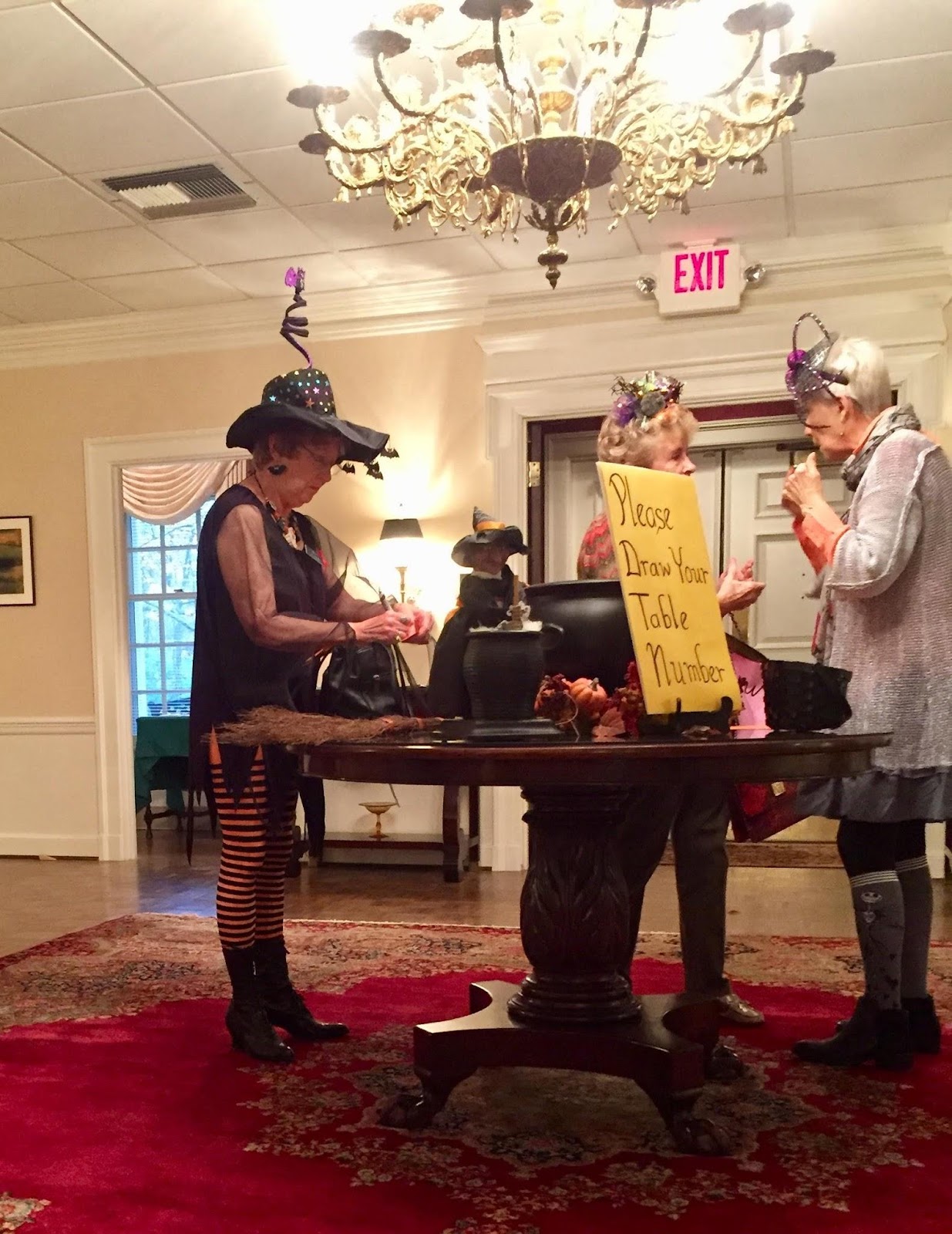
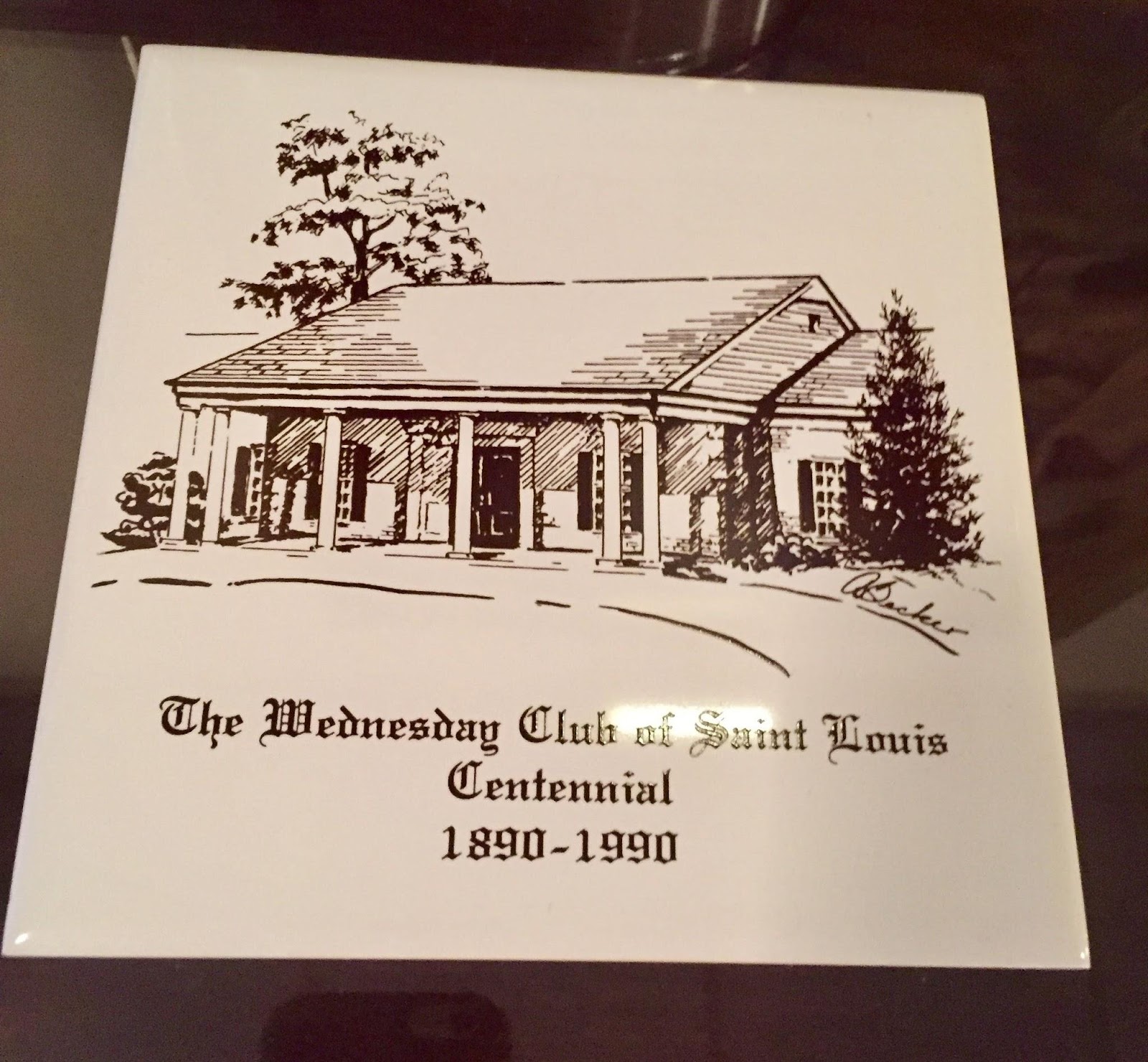
There were hats.  Almost everybody wore one.  As the women filtered through the doors one or two at a time, the Wednesday Club might have been a hiccup in the time space...or was it a time-place continuum:  a dignified, brick, white columned place with a boardroom, a century plus of history, and a structure which charged each member with a task: from pouring coffee to running the state of the art sound system to inviting the guest lecturer in one of twelve different disciplines.  Two women in the restroom adjusting their Halloween finery were discussing the whereabouts of a third: ‘Has anyone seen her yet?’


‘Well, no, and I called at eight and there was no answer….’


Oh no! I thought, imagining an injury or bad fall…..


’But she may be playing tennis…’


So much for preconceived notions...my mental vision is shattered by a two handed backhand...
Our hostess is a member of Missouri Farm Bureau and has read Blake’s opening articles in the Farm Bureau’s Show Me Magazine.  In one of her introductory letters, we learn she and her husband have a farm in Crawford county and they understand that cattle need protection from predators and the elements and why some people need to harvest three deer  “to make it through the winter.” In her words, “this is likely not know by many in the city”. Blake’s talk will have to deal, at least tangentially, with the approved topic in the History section: Omission in U.S. History in the Media.  Whew!  Because it is very clear that discussing spitting contests and name calling, whether social media present or yellow journalism past, is beyond the pale of the good manners and propriety of the Wednesday Club, Blake’s talk mentions what the media gets wrong, but its main focus is what agriculture gets right.


 Every day and in every way, today’s agriculture overcomes obstacles of weather and climate, disease and fertility to feed the people of the world. But you have to get past the “bad news” to learn about this a modern day miracle.
Fortunately, the women (and man) of the Wednesday club are receptive to this tale.  They are folks of a generation that understands science; many have been associated with medicine or Washington University in their professional lives.  They are also of an age to enjoy or at least tolerate multiple pictures of cute grandchildren and to poke gentle fun at the minor technological snafus posed by holding a mouse backwards.  This is an audience unfazed by the science of genetic modification, but a little ouchy about ethanol; after all, one of their previous guest lecturers was from the Danforth Plant Science center. Someone asks about food deserts and another member seems quite concerned when Blake mentions that we have been using no till farming for twenty years on our highly erodible soils.  Turns out her farmland is in Illinois where seldom is heard a discouraging word and the soils are deep, black….and flat.

Off to lunch, where, in a flashback of nostalgia,  I halfway expect to be served a cottage cheese filled pear on a lettuce leaf.  Didn’t happen. Instead, I compliment the coffee and eat my Halloween hued cupcake, enjoying the cheerful chatter from the tables all around.  When we were first married, I accompanied Millie to a couple of meetings of the neighborhood Morning Sun Extension Club where the ladies were primarily of Blake’s Grandma Hurst’s generation with names like Eunice, Gertrude and Velma.  And, later, I was a faithful member of the Atchison County Republican Women and an erratic attendee of the Tarkio Garden Club with stalwart women all a generation or two older than me. But kids and work took precedence over civic groups and meetings and I hardly noticed when local organizations like these faded away.  The women of the Wednesday Club shore up their volunteerism with a hearty dose of accountability and duty; surely the full tables this Halloween are indicative of a relentless and iron willed civic spirit. Today’s individualistic bent allows us to tailor our self improvement on our own at any time and place of our choosing.  But associations like the Wednesday Club keep the “community” in “betterment”. The past of our grandmothers, if not the hats, lives on at the Wednesday Club, and the culture of our future is better for it...


Friday, August 25, 2017

A Man of Few Words


‘Talk less; smile more’, sings Aaron Burr to Alexander Hamilton.  And there are nights I meet my pillow with the melody in my ear wishing I had followed that advice.  


I do take to heart the admonition in James chapter 3:  “7 For every kind of beast and bird, of reptile and sea creature, can be tamed and has been tamed by mankind,8 but no human being can tame the tongue. It is a restless evil, full of deadly poison. 9 With it we bless our Lord and Father, and with it we curse people who are made in the likeness of God. 10 From the same mouth come blessing and cursing.But just when a sin of omission would be the proper choice, (Talk less! Smile more!) is when I find all kinds of words to say….repetitive words, superfluous words, and the ever popular foot in one’s mouth words.   Oh, blessed Father, please keep me from offering advice unless someone truly asks for it.  


For the most part,  my parents led by deeds, not words.  We were expected to pitch in during any family task; we were expected to get up on time and take care of ourselves. I know we gave out good night hugs but I don’t remember anyone coming to wake us. We were expected to tell the truth, behave at school, and clean our plates.  Some of those tasks were easier than others; when I was young, I didn’t always get around to my chores.  I didn’t think it was laziness on my part so much as forgetfulness...a distinction without difference in my father’s opinion.  But my mother and father always cleaned up together after a meal; we  attended church and Sunday school together; we finished our work before we played, and somehow, though it wasn’t a topic discussed over supper, we knew our parents saved for everything they purchased.  They practiced without preaching, bringing to mind 1 John 3:18:”Dear children, let us not love with words or speech but with actions and in truth.”


All that aside, I can tell you two very specific instances that my father spoke to me very seriously, and, in doing so, set the course for my life.


During high school, I spent all my spare time playing music: giving lessons, playing in jazz band, playing in the pit orchestra for productions.  And I was encouraged by my director...and friends...to pursue a career that included music. But my father had a strong opinion on the subject and what he told me had the solid ring of truth.  He reminded me that one needs more than practice, more than talent, to be a musician: it is a profession that requires, if not genius, then passion...a single-minded devotion to perfection that very few people can sustain.  And I wasn’t one of them. Like him, he said, I could love music...and enjoy it as an avocation all my life.  Better, said he, to choose a profession that would undoubtedly serve mankind..one so encompassing of the various threads of knowledge that a person would find it not just rewarding, but also fascinating, whatever contribution he made.  


So..I got a scholarship that paid for clarinet lessons and enrolled in the College of Agriculture.  My piece of the ag pie may have been a small one, but it has never been boring.


That was vocation.  His second piece of advice was issued after Blake and I were engaged.  I was coming down the stairs into the basement of their house in Jeff City when he turned to me and said: “After you are married, you cannot come back home.”  That wasn’t all the conversation, but that short admonition told me I was on my own, a grownup, and responsible for my own life from here on out.  I guess Blake and I thought at the time that we were grownup, and neither set of parents told us we were foolish, but I always remembered and took to heart the gravity of that exchange.


I cannot imagine better advice than that which yields four decades of happy marriage and satisfying work!


Photo 20140827212320

Wednesday, September 14, 2016

Turkey Redux


My ongoing computer education...and labor of love....is the compilation of six years of "The Farmer's Wife", Millie's weekly vignettes of humor, history, reminiscence, and sometimes all three for the Tarkio Avalanche.  It's a dandy occupation for fall nights: sitting on the couch with a baseball game silently playing on the television  and a laptop on my....well, lap.  This week, Blake happens to be hobnobbing with high tech agriculture types at what we common folk might characterize as a "Shark Tank" gathering for agricultural innovation.  As an erstwhile future consumer of what these folks are peddling, his message to them could be paraphrased in the famous, if unsubstantiated, words of Benjamin Franklin upon signing the Declaration of Independence: "If we do not hang together, we shall surely hang separately." One might assume this message would resonate, perhaps precipitate a rousing 'hooah', but that was not the case.  The participants were "all in" when the subject was the application of technology to seed, machinery, and other inputs for crop production.  But when the subject turned to modern animal production systems, the affirmation could be summarized as 'crickets'.   No surprise to hear that the food served at this gathering was heavy on descriptive terms....and light on substance. It isn't an encouraging scenario: the best and brightest minds toiling on a future for agriculture....that harkens back to mid 20th century for its models of poultry or pork or beef production.

Therein lies a tale....a slice of history, if you will, unadorned, unedited, and without any of the warm feelings modern poultry hobbyists and proponents of the good old days would like to pull over the cold hard facts like a cozy comforter.  

Here's Millie's 2008 article about the rise and fall of pasture turkey production from one Atchison county farmer's  experience back in the 1950s:
 The Farmer's Wife
    THIS PICTURE, TAKEN IN 1956 - Shows 12 acres of turkeys with the same amount on the other side of the hill. Lynn Niemann had sold 6,000 turkeys prior to this picture being taken. He was told that he was one of the largest tur­ key producers at that time.


By this time, many of you have already purchased your turkey for Thanksgiving dinner. The size of it depends on how many people there will be gathered around your table on Thanksgiving Day. You had a few things to consider when you purchased it, besides the size of it. What brand would be the best tasting? Would you buy a frozen one or a fresh one? Where would you get the most meat for the cheapest price? Possibly other factors not mentioned here were considered as well. As you took it home, did you ever consider how convenient it was to be able to find a nice fat turkey at your grocery store?

I have visited with Charles Lynn Niemann several different times about his experience with raising turkeys during the 1950's.

Lynn lived north of the Farmers City Store. His father owned 160 acres of which 100 or more he kept in permanent pasture. It was basically unproductive. Looking about for a method to utilize this in a productive manner, Lynn started raising turkeys, ranging them on this pasture land.

The first year he raised 200, then went to 1,000, 3,000, 5,000, and then to 10,000. The first four years in this business were profitable. The last year the market went to pot, thanks to several different companies entering the production, processing, and marketing phase of this business. Consequently, the price in a controlled market did not improve, as well as other factors beyond Lynn's control, and he, as well as many others in the business, absorbed a huge loss and most producers and Lynn quit the business.


One of the hazards in turkey  production on an open range is an unexpected hard rain.  The turkeys drown quite readily if a large or heavy rain is the first exposure to the young turkeys. Lynn witnessed 4,000 drowning the first night  there was  a hard  rain  on  the  range, that  time  a  $12,000  loss, and there was  no way  to prevent  it. There were other factors in the loss of many turkeys due to heat  and predators.

Lynn related to me that during this time of raising these turkeys, it took several truckloads of feed a day. He did not have an adequate supply of water and hired Luke Mather to haul a load of water to the turkeys every day. He eventually had a deep well dug which helped supply water to the turkeys but, again, at a cost.

The year after he stopped raising the turkeys, he planted corn on the acres where the turkeys were raised. There had been so much turkey manure on the land that  the white  corn planted there produced over 170 bushels per acre, a record yield for Atchison  County at that time. 
 When he quit the turkey business, Lynn had suffered  close to a $60,000 loss. That was a lot of money i n the 1950's. , He said, "It was a time in my life not worth remembering."

I believe Millie's piece about Lynn Niemann would resonate with livestock producers attempting to convince the general population and well meaning animal advocates that reinventing the wheel when it comes to animal agriculture will come at a price.  More animals will be injured or killed by predators, weather, and their cohorts in pastures and pens.  Prices will be more volatile and costs will increase.  That is a pattern centuries old.  Only time will tell whether the innovators at Blake's meeting will produce breakthroughs  that change the food system for the better.  But rehashing methods older than our grand and great-grand parents used is surely not the answer....