Showing posts with label #Missouri Farm Bureau. Show all posts

Friday, December 9, 2016

"Hard Boiled Egg"


The Massachusetts Minimum Size Requirements for Farm Animal Containment, also known as Question 3, was on the November 8, 2016, ballot in Massachusetts as an indirect initiated state statute. It was approved.
"yes" vote supported this proposal to prohibit the sale of eggs, veal, or pork of a farm animal confined in spaces that prevent the animal from lying down, standing up, extending its limbs, or turning around.
"no" vote opposed this proposal.

Millie:  "There were always nine people to feed."

 "We ate A LOT of eggs."


Diane: "I have experienced hunger and homelessness with my family.'

"I have pawned jewelry inherited from my grandmother to feed my children."

"I have dug through my sofa for enough change to buy a dozen eggs for dinner."

Millie: " We 'd walk by Grandma's after church after she'd  baked bread.  If she was home we'd stay and visit.  If she wasn't, we ate all her food. We'd spread mustard on the homemade bread..."

 "Mom baked bread every Saturday; she made loaves enough to last all week.  She baked home made donuts with some of the dough. The older kids told us younger ones biting into a donut hole would kill us.  And when we left a chewed around hole behind, the older kids came after and ate them all.....  

Diane: "I was a mom and grandma struggling to pay my bills, working two jobs, unaware that so much money and effort was being earned and spent to bad mouth our food system, those who grow, and those of us who do not eat from their politically correct menus."

"I had no idea how indifferent the food police are to those who struggle and cannot afford to take our food for granted."

"Ninety percent of egg customers vote for conventional eggs when we shop, yet big retail ag let themselves be bullied by vegans who, ironically, are not even their egg and meat customers."


Diane: "The perception that farm groups are going after federal nutrition spending for the poor divides the urban and rural coalition, playing right into the hands and policies of the food police."

 Dianne Sullivan is standing in front of 1200 Missouri farmers, a moral force behind the podium, her sentences short, her message stinging  like BBs.  

"We must be more united and assertive in protecting and distributing our abundance."  


"We must have the voices of victims in this debate join with those who produce."

"The voice of low and middle income consumers can no longer be excluded from the negotiating tables."

"It is imperative that we restore the farm bill coalition, uniting urban and rural partnerships, to promote food security and protect our dinner plates from the self-appointed food police."

Dianne is speaking to us food producers about food consumers....not the consumers that propelled Massachusetts Question 3 to victory in November, not the ones purportedly eating their sausage and eggs without guilt, knowing the hog wallowed and the chicken scratched before becoming over easy in a quaint New England diner. No, the consumers Diane is speaking for are people like my mother-in-law and most farm families in the not so distant past: hard working, hard scrabble, hand to mouth folks. People on a budget, people who cut coupons, people whose grocery carts have gallons of milk, peanut butter, eggs, and whatever is on sale that week. The "food elite" and "food police" Diane dismisses might consider a pantry full of such basics barren in taste or choice, but it offers what is most necessary: bounty and energy at a reasonable price. Her emphasis on the cost of food is a necessary and potent reminder to those of us who grow it: our allies in the debate about the indispensability of scientific and modern inputs and methods in agriculture cannot afford the luxury of free range, GMO free, or other even less measurable and efficacious adjectives to describe their dinner. They are even more powerless against the bankroll and celebrity cache' of organizations like HSUS and the Sierra Club. ( More endorsements of Question 3)

Diane: "As you know, corporate agriculture and big retail has the ability to pinch producers on one end and pass costs on to consumers on the other end, making it all too easy for some of them to lie down, roll over, and play dead, whenever HSUS marches in with their list of demands. " 

"As I shared before every Massachusetts audience I encountered, question 3 is a regressive food tax, hitting poor people the hardest and according to Cornell, will cost consumers nearly $250 million in higher food costs the first year alone."

"This is the definition of social injustice: those elite with money and satisfied choices imposing burdens on those with neither."


Those of us who are the second and third ....or the fourth...or fifth generations of family farmers...have heard tell how our parents, grandparents, and ancestors worked and sacrificed to make a living and feed their families. Their stories are our heritage...and our conscience in the food fights of this era of prosperity. The mindset that ignores the well being of our neighbor in pursuit of some endgame in which animals are landscape, not menu, is not merely selfish, but immoral. Food is for people and farmers' mission is to provide it the best way they know how. To that end:

Diane: "American agriculture does provide the safest abundance in the world."

"It does so more sustainably than anywhere else in the world."

"American agriculture is the envy of the world".

"American agriculture will decide whether growing world food demand is met or, tragically, whether we fail."

"How much courage should it take to stand up for that?"

 "This is a call to action. And remember, in the end, you will be judged by your actions, not your intentions. You may have a heart of gold, but so does a hard-boiled egg."


Tuesday, March 22, 2016

By the People

"Shall I wear my fake leather jacket? Or my fake leather denim jacket?"

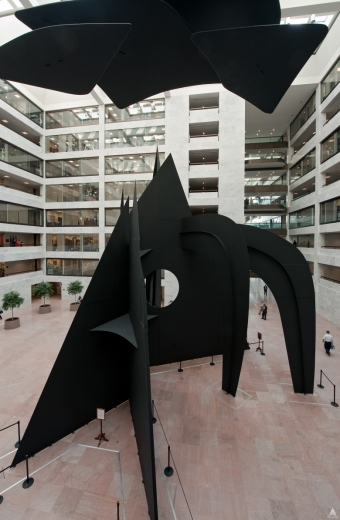
"Wha-at?" Aaron and I are getting ready to attend a reception up on Capitol Hill, in the Hart Senate Office building, and I'm asking his opinion.  The notion of a 'fake leather denim jacket' tickles him  enough that we repeat it several times before I decide on the plain ol'fake leather jacket for this first evening out of our trip to Washington, D.C. After careful consideration, he decides to upgrade from his travel attire to a fresh polo shirt in deference not only to any dignitaries we might come upon but also the significance of being in our nation's capital.  Our walk up the Mall is evidence of his earnestness and sincerity:  we talk about General Meade, the Taft Carillon, and the construction on the Capitol dome, while he frames various interesting architectural elements in the viewfinder of his phone.  Traversing the lobby of the Hart building opens another strand of conversation: about the massive Alexander Calder sculpture called Mountains and Clouds, the earthquake of 2011, and where the missing "clouds" are stashed while the entire installation is reinforced.  "Stabile-ized"so to speak.
Sure enough, Aaron sees two different influential Senators at the AgriPulse reception and is introduced to a former Secretary of Agriculture, John Block, from an administration so antique to Aaron's age cohort as to be not merely historic, but legendary.  The only way to top this intro to Washington DC is to stop at Johnny's Half Shell for supper (downstairs from both CSpan and Fox News DC Bureau) where there's a big crowd this Monday night.  Aaron and his Grandpa each clean up their bowls of lobster while straining to eavesdrop on yet another Senator's politically charged conversation at the neighboring table.
A walk down Pennsylvania Ave. is an exercise in geography and history.  Here on Freedom Plaza Pierre L'Enfant's grand scheme is easier to understand even if the spider web of radial streets strikes a sensible Midwestern boy as needlessly complicated.
Aaron chooses to be photographed in the "Red Room" of the White House after learning that the Oval Office was not included in the original building. And that's about as close as he gets; we can see the President's home from the far side of Lafayette Square and can pose for a picture on the only spot of dead grass available to tourists for an unobstructed view.  Aaron was unperturbed by the distance, being way more interested in the guys wearing the Secret Service vests just beyond the yellow tape.
This mix of current events and historical perspective is a hallmark of the Washington DC trip Missouri Farm Bureau puts together for the 70 to 80 members that attend. Like most tourists do, our group mingles with the crowds at the Lincoln and war memorials on a clear and quiet night.
 Per Aaron's request, we spend time in the Smithsonian museums examining meteorites and human origins, precious jewelry and gold nuggets, the physics of flight, and sea air operations, before tumbling round and round in a flight simulator.  He sits attentively through briefings about regulatory overreach, the economics of trade, and updates on a critical vote on GMO labeling:  issues of continuing concern for anyone in agriculture but not necessarily on the top ten list for 12 year olds.

In the Library of Congress, we are nose to the glass close to Thomas Jefferson's own books, his references on plants, on architecture, on philosophy and religion.  Senator Roy Blunt has his office in the same rooms Harry Truman used when he was a Senator and later, during the 82 days he was vice President. Time compresses in places like these, and the bright line between history and current events blurs.

Not every small town kid gets to eat breakfast with Congressmen and hear them call the folks around the table by their first names. Most folks would be surprised at the familiarity and frankness with which these elected officials speak in front of this particular group.  This get together doesn't feel like the bomb throwing, fist pounding version of Washington we see on the news every night; rather, we hear that this group of representatives works for common ground, aims for civility, and does cross the party divide on occasion. At least the ones that show up for breakfast with the Farm Bureau.
 To be twelve is to be old enough not just to learn historical facts, but to begin to feel a sense of history, to appreciate the past and compare it to the present.  To touch and visit our landmarks and monuments; to meet, even briefly, those who represent us and govern our country, is to become a participant in our nation, not a bystander, and thus to help bear the burden of the past and future. It's too soon to say whether Aaron will be a better leader because of this experience. But he will be a better citizen....


Friday, February 19, 2016

Sometimes a Great Notion

"The past is funny..it never seems to let things lie, finished."
 Ken Kesey


Midway through February. X's marking the days on the calendar. Not just the days...but the years, too. Driving north on our way home from this year's Farm Bureau Young Farmers and Ranchers conference as we have many times before, beginning back in the early '80s, when we were unarguably not only farmers but,officially, also very young.

The young people at the conference today are sharp, energized, informed; not at all the insecure, inexperienced, former suburban farm wife I recollect signing my name tag and attending my first seminar. I simply can't imagine them participating in the misadventures, mistakes, and miscalculations that comprised our baby steps into the new world of what the sages of that era called 'alternative agriculture.' If you Google search 'alternative agriculture', you'll surface a long litany of articles with the word 'sustainable' in the accompanying blurb. In the early 1980s, 'alternative' meant some enterprise a farmer and/or farmer's wife could undertake to supplement their farm income, something different than their usual commodities, something they could grow that would use their talents, energy, and labor to reach beyond their crippled local economy and build independence. But our young family was just looking for something a busy farmer and stay home mama could do that could be built on the cheap on Saturday evenings and nights after work.

"Do you remember...?"
 This phrase is the introduction to tales crystallized into family legend that can bore children unto the third and fourth generation. 'Do you remember'...the small town customers whose business collapsed one afternoon into a pile of bricks....the poinsettias we didn't sell the Christmas Eve it was 25 below zero....the windy spring day a good neighbor drove by just in time to rescue Blake and me and a piece of greenhouse plastic from a scary parasailing experience into our cornfield.
I do.... I remember when a big gust of January wind lifted the baseboard of the first incarnation of greenhouses number 3 and 4, homemade of of 3/4"conduit,three inches off the ground. The original number 2 greenhouse, also home engineered, succumbed to a wet late spring snow....but that didn't stop us from growing a few more flowers in what was now an odd shaped cold frame!
We remember delivering what we thought was a big load of flowers...100 flats!....to a customer way down in Wichita, Kansas. Blake and I rattled south on the quiet Kansas Turnpike, pulled into Wichita about midnight to unload our flats of posies, then drank coffee and stared out at the empty darkness all the long drive home. What were we thinking? I don't know...we should have been wondering how we made a cent on the transaction. Not surprisingly, that particular garden center experiment disappeared without a trace in a year or three.

One year we tried to save some money buying some little pots at an auction, one of our very first 'wholesale' purchases with our brand spanking new sales tax number; we  bought them, only to discover later that the building holding the supplies was a nasty EPA Superfund site! The trunk of our 1981 diesel Delta 88 was commodious but insufficient for business purposes..besides, three kids in the back were pushing the limits of togetherness. The death knell for the diesel was the day it burned up its second transmission on I-29 while we were picking up baby plants at the airport, stranding us at a rest stop while two Missouri Highway patrol cars made a screaming arrival with wailing sirens and flashing lights

Still living on the cheap, we bought our first dedicated delivery vehicle off the parking lot of our local repairman  for $600. In its first life, the little flat front 1969 Ford cargo van worked for Fairfax Comfort Air.  With a new paint job covering most of the rust, it would hold a homemade plant rack and was downright cute painted up with a big red geranium on the side.
Ben's very first driving experience was in that van: a mere three feet over a curb....toward the plate glass window of the flower shop in Rock Port. He was two and couldn't reach the clutch, but that didn't stop him from dropping the van into gear when his mama left it running and his sister was supposed to keep him under wraps.
Today, 2/16/2016, I started up the seeder and planted some vegetables.
This seeder pops and crackles, breathes in and puffs out like Thomas the Train. It was already twenty years old when we bought it in 1992 or so, but, with continuing maintenance it should, as my father says, take me out. This is not inconsequential; Lee hates to seed and won't mind if we retire to watch the Cardinals at Spring Training...as long as I come back once a week to plant tomatoes and peppers and eggplant til I'm eighty. This seeder is far from hi-tech, but it is a better tool than pinching each seed between thumb and index finger and dropping them by hand in a little furrow in all manner of plastic trays of potting mix.
Back when my sister Laura would come up one weekend a year to help transplant the plug trays of begonias and petunias and seed geraniums we had picked up at the airport, we couldn't have imagined the six hundred flats Matt will transplant in just two days this week.
Sometimes I wonder what became of the greenhouse salesman who sold us our half dozen Canadian greenhouses over a five year period. We bought them because they were supposed to be strong enough to survive any wind short of a tornado. He always showed up just before suppertime and we always invited him in. Guess his commission wasn't enough to cover a hot meal....
Last month we visited a farm that hosts more than 12000 people on fall weekends for their corn maze. Their biggest problem these days: finding a place to park all their visitors. But the farmer also pointed out another venture: a field beautifully trellised and irrigated studded with an occasional 3 or 4 foot scraggly shrub. This was supposed to be an olive plantation, the successor to a sod field that fell victim to the real estate bust of a few years back. They had planted five acres of olives after farmers in a neighboring state had success with the enterprise. Only problem was: the olives wouldn't flourish that far south. That kind of upfront honesty about one's failures is a great example and comforting reassurance to all of us with a recycling bin full of misguided notions.
Sometimes, mistakes, bullheadedness, bad luck and poor timing stand out in memory like a 5 story flashing LED billboard on Times Square. If only.... What if......? Truth be told, a careening pinball path to success is likely no better and no worse than the norm. I hope all the young entrepreneurs Kansas City this past weekend have smooth sailing through their endeavors. And when they don't, I hope they survive to joke about it decades afterwards. May they laugh long and prosper!
You're not the only one who's made mistakes, but they're the only things that you can truly call your own....
Billy Joel

Monday, November 30, 2015

Calling Mr. Rockwell


One of Norman Rockwell's most iconic paintings portrays a young man in a plaid work shirt and a worn leather jacket standing alone among his fellow citizens. He has a couple of folded sheets of paper sticking out of his jacket pocket, but they have been forgotten in the heat of the discussion and he speaks off the cuff with passion and heartfelt intensity. All eyes are upon him; his audience of men in ties and women in hats listens respectfully. Whether they agree with him or not, they are polite and acknowledge by their attention his right to speak his mind. The painting is titled "Freedom of Speech"; it is part of the series "Four Freedoms" inspired by Franklin D. Roosevelt's State of the Union address in 1941.
This painting is what I envision every year when we attend the Missouri Farm Bureau Annual meeting.  Farm families and rural residents from all over our state will gather to catch up with old friends, to be entertained, to listen and learn from eminent speakers and those whom we have elected.  We will eat together, complain about the weather and what it did to our farms, brag on children and grandchildren and ooh and aah over the accomplishments of other folks' children and grandchildren.
But we will also work.  The members of Missouri Farm Bureau who gather each year in December will conduct the serious business of  making the policies this organization will work to fulfill during 2016.  The thick sheaf of colored paper each voting delegate will receive contains color coded pages with the previous year's policy, beginning with the Farm Bureau philosophy and proceeding alphabetically through Agricultural Credit to Young Farmers.  These pages will show redactions, additions and all changes made by the members of the State Resolutions committee, who have collated, combined, and voted on suggestions and concerns from the questionnaires submitted by members all over the state.  The prospective resolutions originated with the folks in the counties and now are returning to be voted and ratified one by one by those same grassroots members.
It's a big room and resembles nothing so much as a political convention with the signs indicating the seating of Districts 1 through 8 arranged across the floor.  As each policy is read, the chair asks for any changes and waits to recognize any member on the floor that desires to offer an amendment or ask a question.  There is discussion, always respectful, but sometimes heated.  There is always a vote, up or down, yea or nay, but if the voters are particularly hearty in expressing their opinion, a division of the house may be called for and they will vote with their feet...
While the differences may descend into trivialities and unwieldy parsing, the motivation is unimpeachable: to work for what the speaker believes is the very best for the future of his neighbors and compatriots.  To that end, the assemblage acts "Rockwellesque", an adjective spawned by the Oxford English Dictionary,describing anything that is "idealistic, quaint, or sentimental" It is an enviable exercise in thoughtfulness, courtesy, and dedication.  Folks stand up who have been voting delegates for decades, whose views are well known, who are the bedrock of the current policy book.  There are new voices, working through the system, taking their medicine when the delegate body sets them down with a resounding 'nay'.  The concerns of these voters reach far beyond the minutiae of arcane government farm policy and deep into the very bedrock of American culture and tradition: the availability of healthcare, safe roads, and modern technology in rural areas, our property rights...our religious freedom.  We approach these policies with great gravity; without the representation afforded by our association, our minority position will lack a standard bearer amid the clamor of our urban nation.
It is worth celebrating these associations, these increasingly rare examples of voter rubber meeting policy road.  When I see one of my neighbors at the mike, speaking his mind in front of seven hundred or so of his peers, I feel a small thrill of optimism and hope.  To the extent this takes place across our nation, we are part of a Norman Rockwellesque America: the one man, one voice, exercising his right to speak his conscience among his countrymen.

With a Farm Bureau cap in hand.....


Monday, July 28, 2014

The Century Mark: From Wrigley to Carroll County


"There's just no better place to be on a summer afternoon than in Wrigley Field watching the Cards and the Cubs.... " a paraphrase of John Rooney's call on July 26, 2014

Just knowing the kids were visiting Chicago and taking in a game at Wrigley made my heart glad. Listening to the Cards/Cubs game on this Saturday afternoon as the wheels hugged the two lane was a good thing...not as good as being there, but way over on the plus side of the spectrum of summer traditions.   

Cards/Cubs rivalry, road game, road trip, wind rippling the tasseled fields, tractors gathering the shiny new round bales; these are just a few of the good things gathered this weekend for reflection.  Friday evening I drove the rolling curves of Highway 65 through verdant swaths of countryside, past the Blue Mound, the farm stands and businesses of plain folk, and the architectural blast from the past that is the Tina-Avalon school, to the 100th Carroll County Farm Bureau Annual Meeting in Carrollton.  Every seat was occupied; every plate piled with brisket, cheesy potatoes, slaw and green beans. It was a full house of more than 200 Farm Bureau members joined to celebrate and commemorate the longevity and tradition of their organization.  


I am a sucker for old photographs and other paper ephemera of our ties to the past.  Carroll county historians laid out a table of annual reports preserved from the 1940s and 1950s, from the county, the state, and even the American Farm Bureau Federation.  I wished I had a copy of the black and white panorama shot in the banquet hall of a Chicago hotel of the entire delegation of the American Farm Bureau Federation gathered for a meal during the 20th anniversary of the organization's existence.  The farmers and farmers' wives face the camera...the men clean shaven in white shirts and black suits and many of the women wearing hats.  Its a big group...and a serious group.....except for one errant uppity Nebraska delegate plugging his state sign....and all of them are volunteers. (Some of them might even be Cubs fans.)

I haven't seen inside the policy books from those annual meetings, but I know what consumes the time and energy of dedicated Farm Bureau volunteers today.  Farmers are torn between the day to day concerns folks in that photo would recognize but also threats to their businesses their ancestors would consider ludicrous or silly.  Farmers in the '40s were still 18 percent of the labor force and 23 percent of the population.  No doubt the delegate body in 1939 found plenty to worry about without considering the possibility that agriculture itself would be on trial.


Off to Palmyra in Marion county, where I bet there was a great crowd in 1940 for the Fair parade, just like there was this weekend. 

 The scene under the picnic shelter is straight out of a Thomas Hart Benton painting: farmers and families perched on picnic benches, standing under the shade tree, summery red bronze and baked by the sun, at rest, and the children endlessly busy, flitting from water tank to toy tractor to nowhere in particular, making their own breeze.  And under that tree, the local politicians speechifying, exhorting the crowd for the rights of farmers to farm, and subtly as they can plugging for their own campaigns.

Blake Hurst updates the folks in Palmyra
Baseball may be called America's past time, but to my mind politics has at least a three game lead in the standings, maybe five in even years.  Its a game we all play and sometimes the stakes are very high.  Unlike baseball with its blessedly long 162 games, the folks playing politics this August are facing a sudden death playoff, winner take all.  Farmers are all in, pulling out all the stops, in their efforts to convince the crowd that their goals haven't changed in all the years since 1939.  Volunteers place signs, talk to civic groups, write letters to editors and opponents, send checks to the organizations representing them, but most importantly, tell the world about their farms, their families, their concerns and their wish to continue doing exactly what they do best: feed people by growing food on the lands they love.  


“I just overheard a woman giving her opinion on the abilities of the batsman. You can’t even vote, doll, what gave you the cockamamie idea anyone pays any heed to the musings on sport of your inferior brain?” quotes about Wrigley Field...

OK, call me over the top.  But after the 19th amendment passed in 1920, I can go to the polls just like a man.  As a matter of fact, I already have, casting my absentee ballot this afternoon at my local courthouse.  So, do it.  Go vote.  Support your cause.  Support your local farmers.  Take part in the great American past time...